4 months ago
33
4 months ago
33
The post Kitchen Utensil Sets: What’s Actually Worth Paying For (and What’s Not) appeared first on Penny Pinchin' Mom.
Kitchen utensil sets generally fall into three price categories: budget ($10–$30), mid-range ($40–$80), and premium ($90–$130+). But when you’re standing in a store comparing a $25 set to a $110 set, it can honestly feel a little ridiculous.
How different could they really be? The answer is: not always very different at first.
That’s what makes utensil sets deceptively difficult to shop for. The meaningful differences usually don’t show up immediately. They show up slowly, through repeated cooking, heat exposure, dishwasher cycles, and use over time.
That’s the point when some utensils start to soften around the edges, stain permanently, separate at the seams, or develop that slightly greasy texture that never fully feels clean again. Gross.
Here’s a quick breakdown:
- Budget sets work well for occasional use
- Mid-range sets offer most people the best balance of durability and price
- Premium sets deliver better long-term performance and higher-quality materials
What You’re Actually Paying for in a Utensil Set
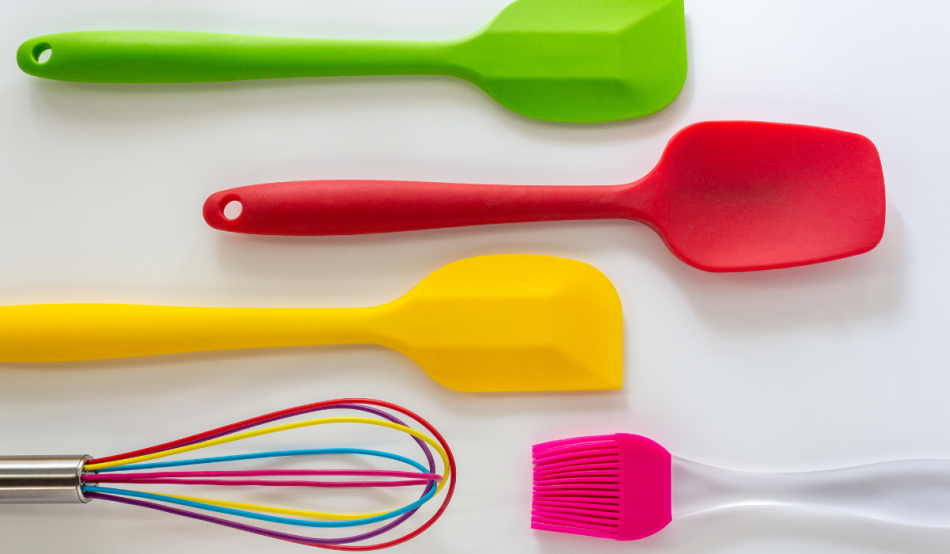
Most utensil sets look similar at first, but the differences show up in how they hold up over time. The biggest factors are material quality, construction, heat resistance, and how long they last before starting to break down.
Material Quality and Heat Resistance
Lower-cost sets often use thinner silicone or mixed plastic materials that are labeled heat-resistant, but do not always perform well with repeated high heat cooking.
You might notice edges getting soft or slightly melted, especially around spatula tips. Some tools start to pick up stains from things like tomato sauce or turmeric. Others begin to hold onto odors or develop small cracks where the handle meets the head.
Higher-quality sets use denser, more stable materials like platinum-grade silicone or reinforced composites. A solid spatula stays firm when you press it down on food in a hot pan. A spoon feels more stable when stirring thicker sauces. Tongs do not flex or wobble when you pick up heavier items. Even scraping the bottom of a pan feels cleaner and more controlled.
It is less about having “fancy” tools and more about having tools that stay consistent every time you cook.
Construction Quality
Construction is one of the most overlooked parts of utensil shopping, but it has a big impact on how long a set actually lasts.
Many cheaper utensils are made in separate pieces. The silicone head is attached to a handle using glue, inserts, or small internal connectors. That connection point takes most of the pressure during cooking, which makes it the most common failure point. Over time, the head can loosen, snap off during use, or shift slightly out of place. In some cases, water can also get trapped where the pieces meet, which makes cleaning harder and can lead to buildup inside the handle.
This is why one-piececonstruction is often used in higher-quality sets. The utensil is molded as a single piece instead of being assembled from multiple parts. That removes the weak point where things usually break.
It also makes day-to-day cleaning easier. With fewer seams and joints, there are fewer places for oil, food, or moisture to collect over time.
Longevity
A $20 utensil set can work fine at first. If you cook occasionally, it might last a long time without any issues. But lower-cost sets tend to wear down one piece at a time. A spatula might start peeling at the edge, a spoon can soften or warp slightly from heat, and a whisk handle might loosen.
Replacing one tool does not seem expensive in the moment. But over a few years, that cycle of replacing individual utensils adds up more than most people expect.
That is why frequent cooks often stop thinking only about the upfront price. The better question becomes how long a set will stay reliable before it needs replacing. For many people, that is where spending more upfront starts to make more sense.
1. Budget Utensil Sets ($10–$30): Fine for Now, Not Forever
Most people start here, and it makes sense. Budget utensil sets are common for first apartments, dorm kitchens, temporary setups, or light cooking. There is nothing wrong with using them if your cooking needs are simple and occasional.
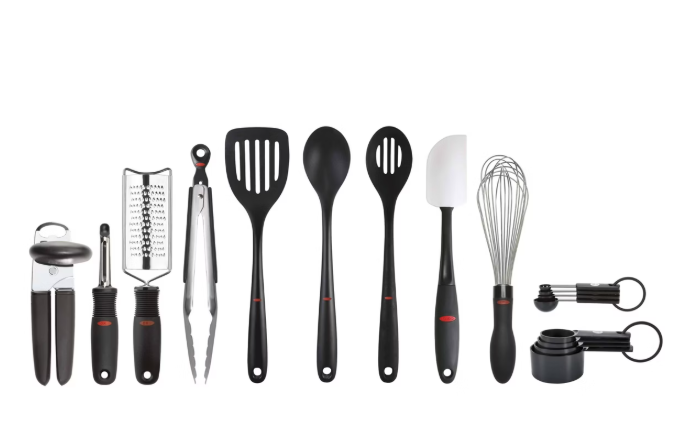
A basic starter set from a big-box store, like this OXO 17pc Culinary and Utensil Set from Target, will absolutely handle simple cooking tasks. If you cook once or twice a week, you may not notice major issues for quite a while. But if you think about it, 17 tools for $59.99 means that each piece is worth about $3.50, which leaves me skeptical about the quality.
The tradeoff comes down to what they are made of and how they are built. In general, if you see a set that says “silicone and nylon” the odds of there being high-quality silicone is small, and the majority is probably made of nylon which is known for melting super easily and warping, creating more cracks for food and bacteria to collect.
Of course it is possible to keep these sets clean and maintained and for a low-heat, occasional cook, it makes sense in my opinion. Think someone who does mostly food prep once a week, like assembling salads, chopping vegetables, and maybe light utensil-use, stirring and cooking in pans – like ground turkey.
Another issue is inconsistency. In the same set, one or two pieces might hold up reasonably well while others wear out much faster. That is usually a result of manufacturers prioritizing cost over long-term durability.
You will often see thinner materials, more seams, and multi-piece construction in this tier. These are all signs that the set is designed to be affordable first and long-lasting second.
Safety and Material Considerations
Some lower-cost plastic-heavy sets may include materials that households prefer to avoid, depending on manufacturing standards and certifications. This is one reason many buyers eventually move toward higher-quality silicone or stainless steel options.
None of this means budget sets are unusable. They are best thought of as short- to medium-term tools. If you cook occasionally, they can work fine. If you cook often, they tend to feel more temporary than permanent.
2. Mid-Range Utensil Sets ($40–$80): Where Most People Actually Land
This is the range where utensil sets start to feel noticeably better in day-to-day use.
The first thing most people notice is sturdiness. The tools feel more solid in your hand, the silicone holds its shape better under heat, and the handles do not flex as much during cooking. Overall, everything just feels more stable and reliable when you are actually using it on a regular basis.
For most households, this ends up being the practical sweet spot. You are not paying premium prices, but you are also not dealing with utensils that warp, crack, or feel like they need to be replaced every year or two. At this point, utensils stop feeling like disposable items and start feeling like long-term kitchen tools.
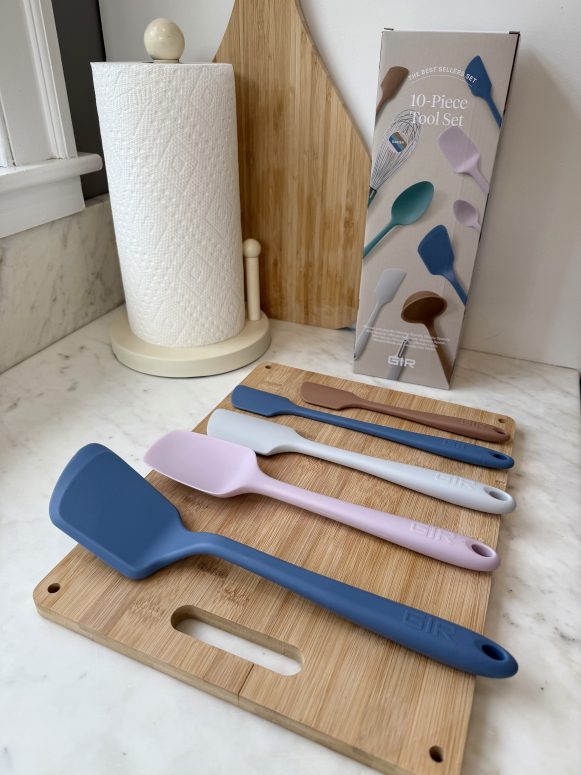
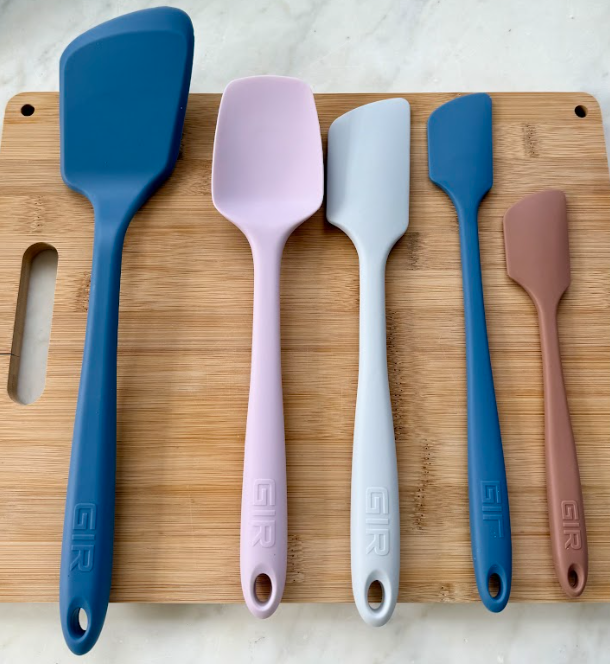
On the lower end of this range, you will find sets like this 5-piece DI ORO Silicone Spatula Set that runs for $39.99 on Amazon. One of the key features here is seamless construction, which means there are no glued joints or separate parts. GIR brand calls this a “unibody” design, which basically means the utensil is made as one continuous piece. That matters because fewer seams usually means fewer places for food, moisture, or bacteria to get trapped.
On the higher end, sets like the GIR 5-Piece Ultimate Tool Set ($69.95) are a strong example of what this tier does well. Realistically, this is where most people probably should be looking.
If you cook a few days a week, maybe for a few people or a family, I would go with the GIR option. It’s kind of the best of both worlds, still falling in the mid-range (upper), but includes the luxury quality. For the price, you get super high-quality silicone and a variety of tools, including a ladle, a few different spatulas and a basting spoon.
With GIR the quality feels relatively consistent across the entire lineup rather than having one or two standout pieces surrounded by weaker accessories. Quality over quantity as they say.
That consistency is really what you are paying for in this range. It is less about extra accessories and more about materials that hold up better and construction that stays reliable over time. Also, these sets also tend to look cleaner and more intentional if you leave them out on the counter.
While premium sets absolutely have advantages, mid-range sets already solve most of the frustration points people experience with cheaper options. And usually, there are more options to choose from that fit different kitchen aesthetics, decor styles, and looks, if that is important to you.
Common Characteristics of Mid-Range Sets
- More solid, sturdy feel during use
- Better heat resistance
- Fewer weak points in construction
- More consistent quality across all pieces
- Better appearance over time
- More comfortable for frequent cooking
3. Premium Utensil Sets ($90–$130+): Where Durability Becomes the Value
Compared to lower tiers, the biggest difference with premium utensils is long-term consistency. A $20 set and a $100 set will both work fine on day one. It’s how they perform after a year of frequent cooking.
Premium sets are usually built with higher-grade materials like denser silicone, stronger internal cores, and fully seamless construction. They also tend to have more consistent quality control, better resistance to heat damage and staining, and in some cases warranties or guarantees.
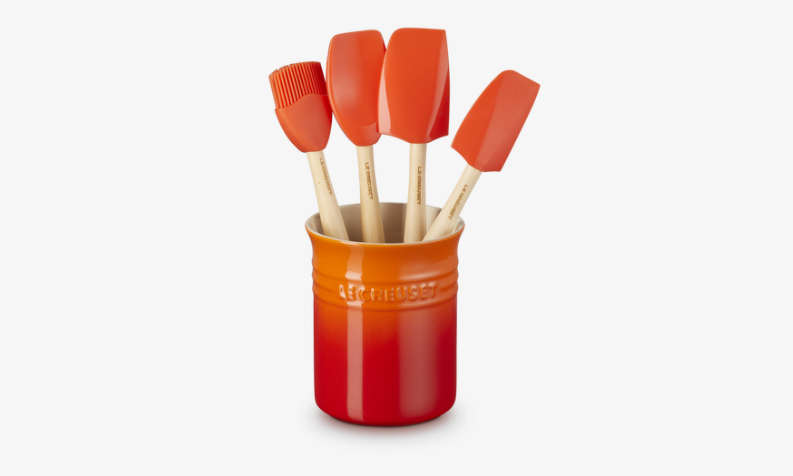
Take something like the Le Crueset Craft Series Utensil Set. Part of what you are paying for is not just the utensils, but extras like a stoneware crock for countertop storage. If you care about having your kitchen look put together, that kind of detail can matter just as much as performance.
In everyday use, the differences are subtle but noticeable if you cook often. Spatulas tend to have cleaner, more precise edges. Spoons feel more stable when stirring thick foods. The silicone flexes in a more controlled way instead of feeling overly soft or loose.
Basically, premium utensil sets make the most sense for people who cook frequently and want tools that stay consistent without needing regular replacement.
So What’s Actually Worth Paying for?
What makes a utensil set “worth it” has less to do with brand names and more to do with how often you cook.
If you only cook occasionally, a budget set will probably work just fine. If you cook a few times a week, mid-range sets usually hit the best balance of price and durability without constant replacements. And if you cook often and want tools you can rely on for years, premium sets start to make more sense because they hold up better over time.
The biggest difference across all tiers usually comes down to your budget, preferences, and how well they hold up after months or years of heat, washing, and daily use.
The post Kitchen Utensil Sets: What’s Actually Worth Paying For (and What’s Not) appeared first on Penny Pinchin' Mom.