47 minutes ago
1
47 minutes ago
1
The post How to Find a Qualified SGO appeared first on Penny Pinchin' Mom.
You’ve heard about the new federal tax credit for education donations. You’re ready to give. And then you hit the obvious next question: where’s the list? Who decides which organizations actually count? How to Find a Qualified SGO?
The honest answer is that there isn’t one single, polished directory yet, because the qualification process is still being built out state by state. But the process itself isn’t a mystery. Here’s exactly how an organization becomes a “qualified Scholarship Granting Organization (SGO),” where that status actually gets recorded, what the paperwork trail looks like behind the scenes, and why a national organization can simplify this search considerably
What “Qualified” Actually Means

Not every education nonprofit is an SGO, and not every SGO is automatically qualified for the federal credit. Qualification happens in two separate layers, and both have to be true at the same time.
Layer one: the organization itself. A Scholarship Granting Organization has to be a 501(c)(3) nonprofit that meets a specific set of federal requirements. These include distributing at least 90 percent of qualifying revenue as scholarships (the 90/10 rule), keeping contributions in segregated accounts rather than mixing them with other funds, avoiding earmarked gifts to specific students, and excluding board members and major donors from receiving scholarships themselves. There’s also a distribution requirement meant to prevent a scholarship fund from quietly becoming a single school’s private funding arm, sometimes described as a minimum-recipient or “not all at one school” standard, so the money spreads across a genuine base of students rather than concentrating in one institution.
For organizations operating in more than one state, there’s an added layer of internal bookkeeping: multistate SGOs are generally expected to maintain separate sub-accounts per state, along with regular reconciliations, so that a state can verify its own students actually received their proportional share of what was raised for them. This is part of why becoming a qualified SGO isn’t just a matter of filing paperwork once. It requires an ongoing compliance infrastructure that has to hold up to audits and annual re-certification.
Layer two: the state’s certified list. Meeting those federal criteria makes an organization eligible to be an SGO in principle, but it doesn’t automatically put a donor’s contribution in line for the credit. Each participating state’s governor, or another entity designated under that state’s law, has to formally opt into the program and then submit a certified list of qualifying SGOs operating in that state to the U.S. Treasury and IRS. Only organizations that make it onto that list, in a state that has actually opted in, generate the credit for their donors.
That two-layer structure is exactly why searching for “the SGO list” online can feel confusing right now. An organization can be fully qualified on paper, with every internal compliance box checked, and still be waiting on its state to formally submit the paperwork that makes it count for tax purposes. Legitimacy and eligibility aren’t the same clock, and they don’t necessarily move at the same speed.
How a State Actually Opts In
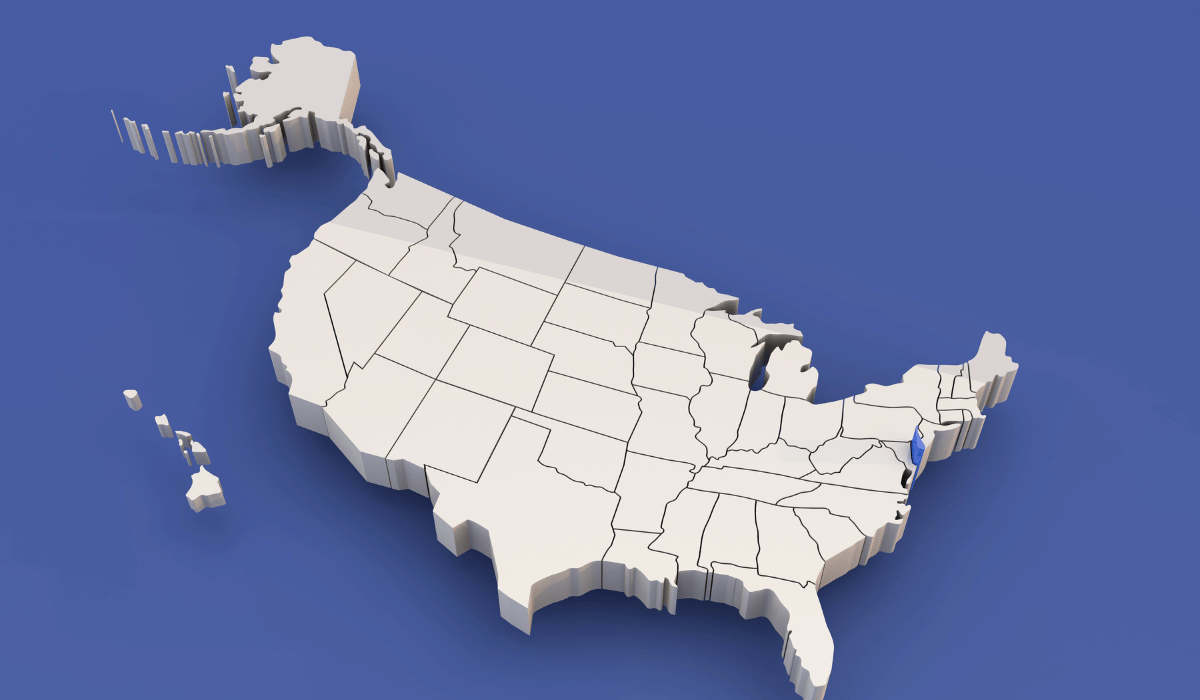
It’s worth understanding the mechanics here, because it explains why some states move faster than others. A state makes what’s called an advance election using IRS Form 15714. This is the formal notice that a state intends to participate in the federal credit for a given calendar year. Once that election is made, the state, through its governor or another designated authority, has to submit a certified list of qualifying SGOs to the Treasury, generally by January 1st of the year the election applies to, or as early as possible for the program’s first year.
Some states handle this entirely through the executive branch, with the governor’s office managing the certification process without needing new legislation. Other states have passed their own laws establishing exactly how SGOs apply for designation within that state, what additional oversight applies, and how the results get reported. Both paths lead to the same outcome: participation, but they move on different timelines. In a handful of states, the two paths have collided; a legislature passes an opt-in bill, and a governor declines to sign it, or a governor moves unilaterally while a legislature is still debating its own framework. That’s part of why state status can look “pending” or “contested” even in places where there’s clear public support for participating.
Where the List Actually Lives

Right now, the closest thing to an official source is the IRS itself. States make their advance election using IRS Form 15714, and the IRS has been publishing updates as states opt in, including periodic newsroom announcements tallying how many states have signed on. The IRS’s Federal Scholarship Tax Credit (FSTC) program page is the most reliable place to check current state participation, since state-by-state status has been changing regularly as more governors act and more legislatures pass their own opt-in frameworks.
What doesn’t exist yet is a single, IRS-run consumer directory where a donor can type in a state and see every certified SGO listed with contact information. States submit their certified lists to the Treasury, but a clean, centralized, donor-facing lookup tool is not part of the picture as of now. That gap is a big part of why this question comes up so often, and why a lot of the guidance circulating online defaults to state-by-state trackers built by third parties rather than a definitive government source. Those third-party trackers can be a useful starting point, but they’re not authoritative the way an IRS-published list is, so treat them as a lead worth verifying rather than a final answer.
The Part Most Searches Miss: You’re Not Limited to Your Own State

Here’s the detail that a lot of state-focused explainers skip over: the credit isn’t tied to where the donor lives. It’s tied to where the SGO operates and whether that state has opted in. A donor in a state that hasn’t opted in yet can still give to a qualified SGO in a state that has, and still claim the federal credit, provided the SGO is on that participating state’s certified list. The scholarship dollars go to students in the participating state, but the donor’s own address doesn’t have to match.
That single fact changes the practical answer to “how do I find a qualified SGO?” Instead of waiting on your own state’s legislature or governor, you can look at which states have already opted in and give to a qualified SGO operating there today. If you live in a state that’s still debating whether to participate, or one where the governor has been openly hesitant, you’re not stuck. Your ability to claim the credit doesn’t depend on your own state’s decision at all.
This also means the framing you’ll see in a lot of local news coverage, “will my state opt in,” is really only half the picture for a donor. It’s the whole picture for a student hoping to receive a scholarship funded through their own state’s program, but for a donor deciding where to send a contribution, the map of options is national from day one.
Why a National SGO Simplifies This
This is where an organization built to operate across multiple states, rather than a single one, becomes a practical shortcut. AFC Scholarship Fund is a national Scholarship Granting Organization, affiliated with the American Federation for Children and built on scholarship infrastructure from the Odyssey network, and it’s designed to appear on the certified lists of participating states as they opt in, rather than being tied to just one state’s paperwork timeline.
For a donor trying to sort through a patchwork of state-by-state statuses, a multistate SGO removes a layer of guesswork: you’re not trying to figure out whether one specific local organization made it onto one specific state’s list. You’re working with an organization built from the ground up to operate wherever the program is live, which means as more states opt in over time, the pool of places your contribution can count only grows, without you having to re-research a new local organization each time.
There’s also a practical advantage tied to how multistate SGOs handle the internal accounting mentioned earlier. Because an organization like this is already set up to run segregated, state-specific sub-accounts and reconcile them regularly, it’s built for exactly the kind of cross-state operation the federal program calls for, rather than adapting a single-state model after the fact.
When the donor portal launches, AFC Scholarship Fund is designed to route your contribution automatically to a participating state where it will count toward the credit, rather than requiring you to independently verify state-by-state eligibility for every gift.
What to Actually Check Before You Give

Until a definitive government-run directory exists, a donor doing their own due diligence should confirm a few things before contributing.
Has the SGO’s state opted in? Check the IRS’s FSTC page or the state’s own announcement for confirmation, not just the organization’s own marketing claims. A state opting in is a matter of public record once the advance election is filed, so this is verifiable independently.
Is the organization on that state’s certified list? This is the step that turns a generally qualified nonprofit into one that actually generates the credit. An organization can meet every federal requirement and still not be certified in a particular state yet, so don’t assume qualification on paper automatically means certification in practice.
Is the organization operating in more than one participating state? If so, your contribution has a wider set of paths to count toward the credit, since it isn’t dependent on a single state’s timeline, and it’s less likely to be affected if one particular state’s process stalls or gets delayed.
Does the organization’s own reporting match what you’d expect from the 90/10 rule? A qualified SGO should be able to speak plainly about how it allocates funds between scholarships and administration. Vague or evasive answers here are worth treating as a caution sign, regardless of whether the state-list technicalities check out.
The Bottom Line

There’s no single searchable “list of qualified SGOs” yet, because the process is built state by state, with the IRS as the closest thing to an authoritative source as states opt in and submit their certifications. The practical workaround, especially while that process is still filling in, is to look at organizations built to operate nationally. AFC Scholarship Fund is designed to be exactly that kind of entry point: a verified SGO built to meet the federal criteria and appear across participating states as the program comes online, starting January 1, 2027, when qualifying contributions begin generating the federal tax credit of up to $1,700 (Treasury rules pending).
The post How to Find a Qualified SGO appeared first on Penny Pinchin' Mom.