1 month ago
24
1 month ago
24
The post Hospital Bag Checklist for Mom and Baby appeared first on Penny Pinchin' Mom.
The hospital bag checklist. You’ve probably started it three times, unpacked it twice, and still aren’t sure if you’ve got the right stuff. I remember sitting at 36 weeks pregnant with my first, staring at a pile of newborn onesies and wondering if I really needed five outfit options for a baby who’d spend most of their time wrapped in a hospital blanket.
What nobody tells you: most hospital bag checklists are either wildly excessive (you don’t need a full skincare routine) or frustratingly vague (what does “comfortable clothes” actually mean?). What you need is a realistic packing list based on what you’ll genuinely reach for during labor, recovery, and those first exhausted hours with your newborn.
This guide covers three essential categories: what mom needs for labor and the days after, what baby actually requires beyond what the hospital provides, and what your partner should pack to stay functional and supportive. You’ll pack 15-25 carefully chosen items that earn their space, nothing more. No fluff, no “nice to haves” that stay zipped in the bag, and no guessing whether you forgot something critical. By the end, you’ll have a complete hospital bag checklist you can pack once and trust completely.
What to Pack for Mom: Labor and Delivery Essentials
Why These Items Matter
Active labor can last 8-24 hours or longer. You need items that help you stay comfortable through contractions and keep you focused on the work ahead. The hospital provides basics, but their versions are institutional-grade and often less comfortable than what you can bring yourself.
Your Essential Labor Items:
Your own pillow in a colored pillowcase – Hospital pillows are flat and smell like industrial detergent. A colored case means it won’t accidentally get mixed with hospital linens. This is the single item most moms say they were grateful to have.
Lip balm and face moisturizer – Labor dries you out. Skip the full skincare routine; bring one good lip balm and your regular face moisturizer. That’s it.
Hair ties and a headband – Get your hair completely off your face and neck. You’ll be hot, sweaty, and annoyed by anything touching your skin during contractions.
Phone charger (long cord) – Outlets are never where you need them. Bring a 10-foot charging cable so your phone stays within reach.
Snacks you actually like – Hospital meal timing won’t match your hunger. Pack 5-8 protein bars, nuts, crackers, or whatever sounds good to you right now. Labor burns 500-800 calories per hour.
Glasses if you wear contacts – You won’t want contacts in during labor or while catching sleep between feedings. Bring your glasses and case.
What to Skip
Don’t pack makeup, multiple outfit changes, or entertainment items like books. You won’t use them. Labor is consuming, and every moment you’re not actively doing something, you’ll be sleeping.
What to Pack for Mom: Postpartum Recovery Items
Why These Items Matter
You’ll spend 24-72 hours recovering in the hospital depending on delivery type. Your body needs support while it heals and adjusts. The hospital provides mesh underwear and giant pads, but many moms prefer their own supplies.
Your Essential Recovery Items:
Comfortable going-home outfit – Think first-trimester maternity clothes or loose pajamas. Your body won’t bounce back instantly. Avoid anything with a waistband that hits where you’ll be sore.
Nursing bra and breast pads – Even if you’re not planning to breastfeed, your milk will come in and you’ll need support and protection from leaking. Size up from your current pregnancy bras.
Flip-flops or slip-on shoes – For shuffling to the bathroom postpartum. Nothing that requires bending over.
Postpartum underwear and extra pads – The hospital provides mesh underwear and giant pads, but many moms prefer their own high-waisted disposable underwear and heavy-flow pads. If you’re particular about what touches your recovering body, pack your preferred brands.
What to Pack for Baby: Hospital Stay to Going Home
What the Hospital Actually Provides
Most hospitals supply newborn diapers, wipes, basic onesies, swaddle blankets, and a knit cap. Before you pack, call your hospital’s labor and delivery unit and ask specifically what they provide and what parents need to bring. This prevents duplicate packing.
Your Essential Baby Items:
2-3 going-home outfits in different sizes – Babies surprise you. Pack one newborn size, one 0-3 month, and one preemie size if you’re measuring small. Choose outfits with easy diaper access (kimono-style or two-piece sets).
Season-appropriate outer layer – A bunting, sleep sack, or warm blanket if you’re delivering in cold months. Hospitals are climate-controlled, but the trip to the car isn’t.
Infant car seat (installed before labor) – You cannot leave the hospital without this. Period. Install it at 37 weeks and have a certified tech check it. Most fire stations and hospitals offer free car seat checks.
Pacifiers (2-3) – Even if you’re planning to breastfeed, having pacifiers available gives you options during those first difficult nights. The hospital may provide one, but bring backups.
Mittens if you want them – Newborns scratch their faces. Some parents like mittens; others don’t bother. If you want them, pack them, because the hospital won’t have them.
A going-home bag – For the baby’s clothes, the hospital freebies, and the paperwork folder they send you home with. The GillyGro Backpack works for the drive home and then converts to daily diaper bag duty, which is one less thing to buy twice.
What to Skip
Don’t pack toys, multiple blankets, or a full week’s worth of outfits. The hospital keeps the baby in their clothing most of the time. You’ll dress your baby exactly once: for the trip home.
What to Pack for Your Partner: Staying Functional and Supportive
Why Partner Packing Matters
Your partner will spend 24-72 hours supporting you, taking shifts with the baby, and trying to stay alert on minimal sleep. If they’re uncomfortable, hungry, or unprepared, they can’t help effectively. A packed partner bag is not optional.
Essential Partner Items:
Change of clothes and toiletries – One complete outfit change plus deodorant, toothbrush, and face wash. They don’t need a full suitcase, but they do need enough to stay fresh.
Pillow and blanket – Hospital guest “beds” are usually chairs that fold flat or short couches. A pillow and lightweight blanket transform an impossible sleep situation into a barely manageable one.
Snacks and drinks – Your partner needs to eat without leaving you during active labor. Pack 6-10 non-perishable, high-protein snacks and a reusable water bottle they can refill.
Phone charger and backup battery – They’ll be texting updates, taking photos, and looking up “is this normal” at 3 AM. Dead phone helps no one.
Cash and insurance cards – For parking, vending machines, or cafeteria runs. Keep insurance information in an easily accessible pocket.
Entertainment for waiting periods – Early labor can take 6-12 hours. Headphones and downloaded shows or podcasts keep your partner occupied without disturbing you.
Download My Free Hospital Bag Checklist
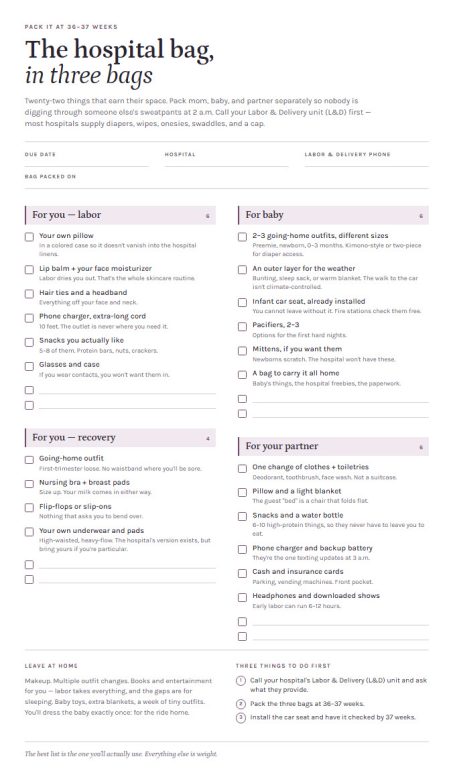
Hospital Bag Checklist Download
Division of Labor
Your partner’s job is to be your advocate, track contractions, communicate with nurses, make decisions when you can’t, and take the first overnight shifts with the baby so you can recover. Their bag should support those specific roles, not prepare them for a vacation.
Pack your hospital bag by category: mom’s labor and recovery essentials in one section, baby’s minimal needs in another, and partner’s support supplies separate. This prevents the 2 AM scramble to find nipple cream buried under someone’s sweatpants. Most moms pack between 36-37 weeks, which gives you time to add forgotten items without the stress of going into labor unpacked.
The best hospital bag checklist is the one you’ll actually use, not the one that looks impressive or covers every hypothetical scenario. Pack what supports labor, facilitates recovery, gets your baby home safely, and keeps your partner functional enough to help. Everything else is just extra weight.
Your next three actions:
- Call your hospital’s L&D unit this week to confirm what they provide
- Pack your bag at 36-37 weeks using the three-category system above
- Install your infant car seat and get it checked by 37 weeks
If you’re still figuring out which diaper bag works for those early weeks and beyond, our guide to choosing the best diaper bag breaks down what actually matters when you’re juggling a newborn and recovering from delivery.
The post Hospital Bag Checklist for Mom and Baby appeared first on Penny Pinchin' Mom.