13 minutes ago
2
The post Fridge Organization Guide for Food That Lasts Longer appeared first on Penny Pinchin' Mom.
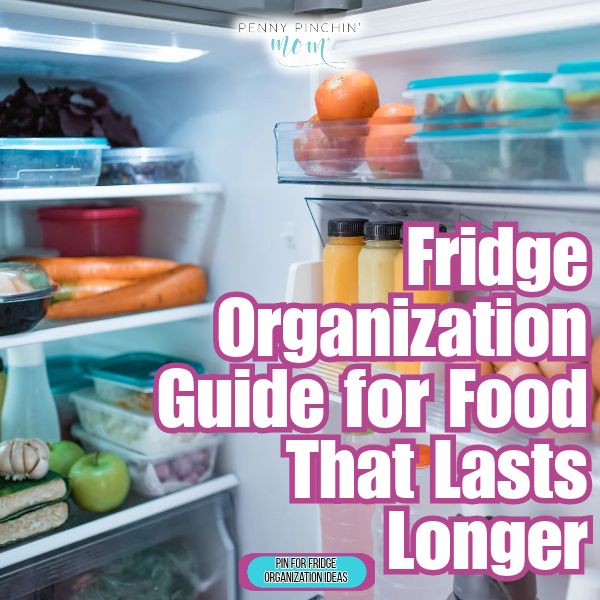
Fridge organization isn’t about matching bins. Knowing how to organize a fridge stops food from going bad before you ever cook it, and that’s the difference between using that $6 bag of spinach and scraping it into the trash on Sunday.
Shoving groceries wherever there’s space, and trusting the door to hold everything, is exactly how produce turns to mush and leftovers become mysteries. Below is a shelf-by-shelf map covering fridge temperature zones, the coldest shelf, the crisper drawers, the door, and exactly how long each type of food actually lasts.
Set the Temperature: 40°F or Below
Your fridge should sit at 40°F or below, and your freezer at 0°F. Those are FDA numbers, not preferences. Bacteria multiply fastest between 40°F and 140°F, so a fridge running at 45°F is quietly shortening the life of everything inside it.
The dial inside most fridges shows numbers 1 through 5, not degrees, which tells you nothing. Buy a standalone fridge thermometer (typically $6-$15), set it on a middle shelf, and check it the next morning before anyone opens the door.
If the reading is above 40°F, turn the dial one notch colder and check again in 24 hours. Repeat until you’re at 40°F or below. That’s the single step that makes every other step on this list work.
Cold air sinks, and the fridge’s cooling vent usually sits toward the back. So the coldest spot in most units is the back of the lower shelves, and the warmest is the door, which gets hit with room-temperature air every time someone grabs the milk.
Model matters, though. In a French door fridge, the coldest zone is usually the back of the bottom shelf, below the drawers that span the full width. Side-by-side units run colder on the lower shelves of the freezer-adjacent wall, so temperature can vary 3-5°F from one side of the same shelf to the other.
Not sure which shelf is coldest in your fridge? Move that thermometer around. Leave it on the top shelf for a day, the bottom shelf the next, then the door. Three days of checking gives you a real map instead of a guess.
Top Shelf: Ready-to-Eat Foods and Leftovers
The top shelf is the least cold shelf inside the fridge, which makes it the right home for food that needs no further cooking:
- Leftovers in covered containers
- Deli meat and hummus
- Yogurt cups and drinks
- Cooked rice, pasta, and prepped lunch items
Since nothing here will be cooked again to kill bacteria, it goes where drips from raw meat can never reach it. Nothing raw lives above ready-to-eat food. Ever.
Use first-in, first-out on this shelf: when Thursday’s chili goes in, slide Tuesday’s chicken to the front. The container you see first is the one you eat first, which is how leftovers get used instead of discovered three weeks later.
Middle Shelves: Dairy and Eggs
Middle shelves hold the steadiest temperature in the whole fridge, which is why dairy belongs here. Milk, cream, sour cream, cottage cheese, and blocks of cheddar all last longer in a consistent zone than they do riding the temperature swings of the door.
Eggs go here too, in their original carton (full details in the storage chart section below). Keep milk toward the back, where it stays coldest, rather than in the door shelf designed to hold it.
Leave about 2 inches of clearance around containers so air can actually circulate. A packed middle shelf creates warm pockets, and a warm pocket is where milk sours four days early.
Bottom Shelf: Raw Meat, Poultry, and Fish
Raw meat, poultry, and fish always go on the bottom shelf. This is a food-safety rule, not a style choice. Two reasons:
- It’s the coldest shelf in most fridges, and raw protein has the shortest safe window of anything you bought.
- If a package leaks, the drips land on the shelf, not on the strawberries or the leftover pasta below.
Set packages on a rimmed baking sheet or in a plastic bin to catch anything that escapes. Grocery store wrap tears more often than you’d think, and a tray turns a food-safety problem into a 30-second wipe-down.
Thawing something frozen? That also goes on the bottom shelf, on the tray, never on the counter.
Crisper Drawers and Humidity Settings
That slider on your crisper drawer isn’t decorative. It opens or closes a vent that controls how much moisture stays trapped inside:
- High humidity (vent closed): leafy greens, lettuce, spinach, herbs, broccoli, carrots. These wilt when they lose moisture.
- Low humidity (vent open): apples, pears, avocados, peaches, melons. These release ethylene gas, which speeds ripening, and the open vent lets it escape.
Keeping apples in with the lettuce is a common reason greens go slimy in four days instead of seven.
Working with a small fridge organization challenge where you only have one drawer? Give it to produce, set it to high humidity, and keep fruit in a bowl on the middle shelf. Produce and raw meat never share a drawer, regardless of how tight the space is.
How Long Food Lasts: A Chart by Category
Eggs stay in their original carton, on a shelf, not in the door. The door is the warmest zone in the fridge, and its temperature swings every single time someone opens it. Eggs need steady cold. The carton also keeps them from absorbing fridge odors and carries the pack date printed on the end.
Yes, even if your fridge came with a molded egg tray in the door. That tray was a design decision, not a food-safety one.
The door is fine for items that don’t spoil quickly:
- Ketchup, mustard, barbecue sauce
- Salad dressings and pickles
- Jam and syrup
- Water bottles and soda
Milk, eggs, and anything raw belong on an interior shelf instead.
These storage times come from the USDA FoodKeeper, the government database of refrigerator and freezer storage windows for hundreds of foods. Times assume your fridge is holding at 40°F or below.
| Food Category | Example | Fridge Storage Time | Source |
|—|—|—|—|
| Raw poultry | Whole or cut-up chicken | 1 to 2 days | USDA FoodKeeper |
| Raw ground meat | Ground beef, turkey | 1 to 2 days | USDA FoodKeeper |
| Raw steaks and roasts | Beef steak, pork roast | 3 to 5 days | USDA FoodKeeper |
| Cooked meat and leftovers | Rotisserie chicken, casserole | 3 to 4 days | USDA FoodKeeper |
| Eggs, in shell | Raw eggs in carton | 3 to 5 weeks | USDA FoodKeeper |
| Milk | Whole or 2% milk | About 1 week | USDA FoodKeeper |
| Hard cheese | Cheddar, Swiss, opened | 3 to 4 weeks | USDA FoodKeeper |
| Soft cheese | Ricotta, cottage cheese | About 1 week | USDA FoodKeeper |
| Leafy greens | Spinach, leaf lettuce | 3 to 7 days | USDA FoodKeeper |
| Berries | Strawberries | 3 to 7 days | USDA FoodKeeper |
| Deli meat | Sliced at the counter | 3 to 5 days | USDA FoodKeeper |
Plan your week around the short-window items first: chicken Monday, ground beef Tuesday, steaks Thursday.
Leftovers: 3 to 4 Days
Still have that lasagna from four nights ago? Toss it. The USDA puts cooked leftovers at 3 to 4 days in the fridge, and that’s the real cutoff, not a number to stretch because it still smells fine. Bacteria that cause foodborne illness don’t change the smell, taste, or look of food.
Get leftovers into the fridge within 2 hours of cooking. If the room is above 90°F, which happens during a summer cookout, that window drops to 1 hour, per USDA.
Two habits that make the 3-to-4-day rule easy to follow:
- Divide big batches into shallow containers so they cool fast instead of staying warm in the center.
- Write the date on a strip of masking tape and stick it on the lid. Five seconds now, zero guessing Thursday.
The Grocery Unload Order
Unloading in this order takes under 5 minutes and keeps cold food cold while you work:
- Frozen items go straight to the freezer. No sorting, no stacking on the counter.
- Raw meat, poultry, and fish go to the bottom shelf, onto the tray, still in their store bags.
- Dairy and eggs go to the middle shelves, eggs in the carton, milk toward the back.
- Produce goes into the crisper drawers, greens in high humidity, ethylene fruit in low.
- Pull older food forward before adding new. Last week’s yogurt sits in front of this week’s. First in, first out, every trip.
- Door items last, since condiments can sit out the longest without harm.
Screenshot that list and tape it inside the cabinet nearest your fridge.
A Fridge Map for the Family: Your Fridge Organization System
A fridge map is a simple labeled diagram of your fridge: a box for each shelf, drawer, and door bin, with a few words naming what belongs there.
- Top shelf: leftovers and ready-to-eat
- Middle: dairy and eggs
- Bottom: raw meat on the tray
- Left drawer: greens, high humidity
- Right drawer: fruit, low humidity
- Door: condiments only
Sketch it on an index card in 5 minutes or type it up and print it. Tape it inside the cabinet door next to the fridge, at kid height.
I know what you’re thinking: my family will never actually follow a fridge map. Fair. Tape it up anyway. Even one other person putting the chicken on the bottom shelf instead of next to the cheese cuts the guesswork in half, and nobody has to text you from the kitchen.
Before a Big Grocery Run
Spend 10 to 15 minutes clearing out the fridge the night before you shop. The steps:
- Check dates against the chart in the storage section above and toss anything past its window.
- Pull the sticky shelf, wash it in warm, soapy water, dry it, and put it back.
- Wipe down the door bins where syrup always drips.
- Move whatever’s left toward the front so it gets used first.
This matters most before a holiday run, when you’re about to bring home a turkey plus 30 pounds of sides and need actual shelf space for all of it. If you’re already past the holiday and staring at containers, our article “How Long Do Thanksgiving Leftovers Last in the Fridge” covers the specific windows for turkey, stuffing, and gravy.
Setting this system up start to finish takes 20 to 30 minutes: check the temperature, reorganize what’s in there now, make the map. After that, it’s the 5-minute unload every week.
These temperatures and storage times are general guidance from USDA and FDA sources. For foods not covered here, check the USDA FoodKeeper app or site directly, especially if anyone in your house is pregnant, elderly, or immunocompromised.
Fridge Organization That Pays You Back
Fridge organization isn’t about a fridge that photographs well. It’s about the spinach lasting until Thursday, the chicken getting cooked before day two, and never standing there wondering whether that container is from this week or last. Food that doesn’t go bad is money you don’t spend twice, which is the quietest way to lower a grocery bill without clipping a single coupon.
Three things to do today:
- Check your fridge temperature. Grab a thermometer ($6-$15) if you don’t have one and confirm you’re at 40°F or below.
- Move raw meat to the bottom shelf right now, onto a tray, if that’s not where it lives.
- Make your fridge map in under 5 minutes from section 11 on an index card and tape it inside the cabinet by the fridge.
Start with the temperature check. It takes five minutes and tells you whether anything else you do in that fridge actually matters.
The post Fridge Organization Guide for Food That Lasts Longer appeared first on Penny Pinchin' Mom.