2 hours ago
2
The post Cost of Milk: Delivery vs Buying at the Store appeared first on Penny Pinchin' Mom.
The milkman used to be a regular fixture in America. Every day or two, he’d visit the houses on his route and drop off shiny glass bottles of fresh milk. Once electric fridges became affordable enough that every family had one, the need for daily milk delivery disappeared. But lately the service has become popular again after evolving to meet the needs of the modern family.
Today, milk delivery isn’t limited to farm-fresh milk. These services, often run by single dairy farms or farm collectives, frequently offer a wide range of products that can replace the weekly grocery run altogether, and the quality of their goods is comparable to or higher than those found in your local supermarket. The drawback? The overall costs are also generally higher, so deciding whether to take the plunge has a lot of moms whipping out the calculator and weighing the pros and cons.
Read on to discover whether milk delivery makes sense for your family or if you’re better off trekking out to the grocery store every week. This article will cover the biggest benefits and drawbacks of each option, the possible financial impacts, and what to look for when choosing a milk delivery service.
Where In-Store Shopping Wins: Pricing
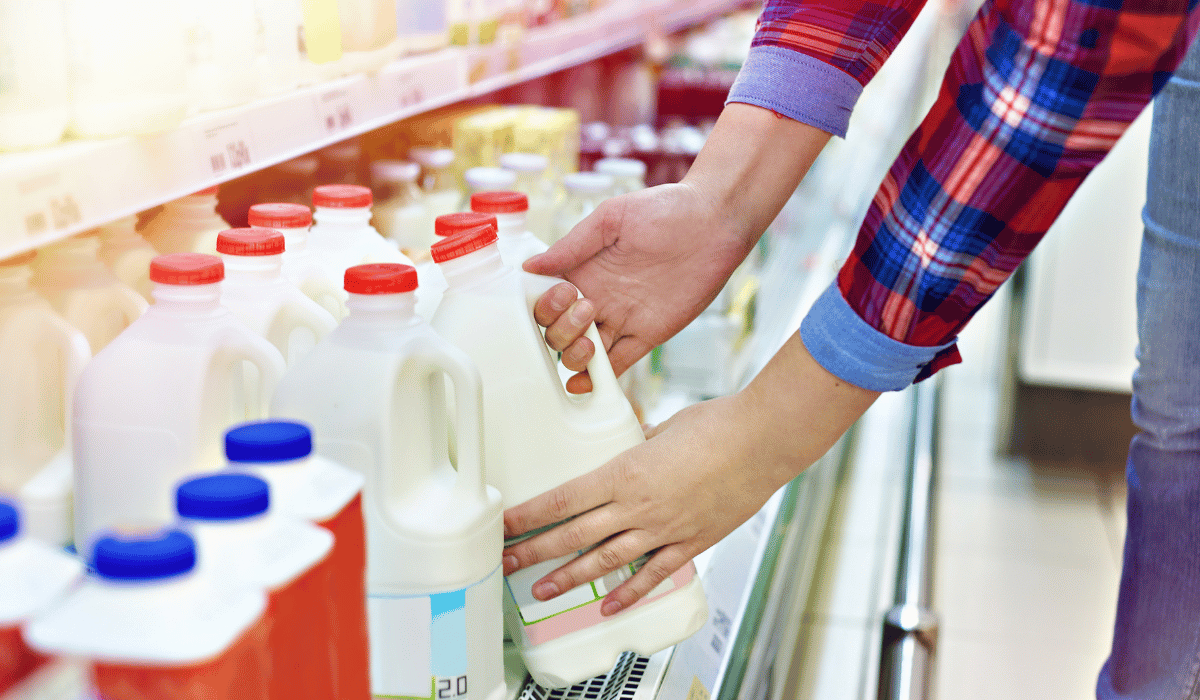
Let’s not mince words: Heading out to a grocery store yourself will almost always get you a better per-unit price, even before we look at delivery and service fees. As I write this, a half-gallon of 2% milk at Target starts at around $1.49. Let’s compare the price of a half-gallon of 2% milk from a few different milk delivery services, from cheapest to most expensive:
- Smith Brothers: $3.49
- Farm to People: $5.59
- TC Farm: $6.99
- Manhattan Milk: $7.99
- Gather & Deliver: $8.50
While the quality of the milk may be higher, the price difference can be a tough hurdle to get over for many families.
Granted, getting your milk via delivery does have its benefits. Ordering through an app rather than walking the aisles can save you a significant chunk of change if you have a tendency to fill your cart with impulse items each week (or if your kids like to toss treats into the cart while you aren’t looking). Getting your groceries delivered can also save gas money if the delivery is free.
Where Delivery Wins: Time and Convenience
Time and convenience are where milk and grocery delivery really demonstrates its value. Once you’ve set up a regular order that includes all of your usual staples through a delivery service, it’s just a matter of making small tweaks each week to add or remove specific items. This can take seconds, compared to driving out to the store, finding a parking spot, doing all the shopping yourself, waiting in line to pay, bagging up, loading the car, and coming all the way back home. If you’re strapped for time between extracurricular activities and appointments, this can be a huge relief.
What to Consider When Looking into Milk Delivery for Your Household

Fees
Delivery and service fees can and do vary widely between providers. Some may have a single flat fee for all orders, some may be a percentage of your order total, and others might have tiered levels.
For example, Smith Brothers in the Pacific Northwest waives delivery fees for orders of $20 or more, and smaller orders have a delivery charge of $4.99, while Manhattan Milk has a $20 delivery fee with a minimum order of $40. As you can see, it’s important to look into policies and pricing!
Some delivery services also offer memberships that get you access to certain perks, like discounted groceries, no-fee delivery, or priority delivery. These may or may not be worth it, depending on how often you order from them and how much you buy. Before committing, sit down with a calculator and figure out whether the savings will offset the membership price.
Another thing to consider is whether or not tips are expected for the service. Some services, like Smith Brothers, have a no-tip policy, while others expect tipping. Considering weekly tipping will increase your overall grocery costs, it’s important to factor this in when figuring out whether milk delivery makes sense for your budget.
Service Area
Delivery services run by local farms or collectives will deliver within a specific service area, often a metro area or county, but sometimes just a particular town or city. Some may offer delivery outside their primary delivery area for an added cost, like NYC’s Farm to People, which has different delivery fees depending on whether you live in Brooklyn, Queens, or Staten Island.
Some also offer pick-up points. While Gather & Deliver in Central Texas charges $15 for home delivery, they also let you grab your groceries from one of their pick-up locations for $1.95.
Scheduling and Adjusting
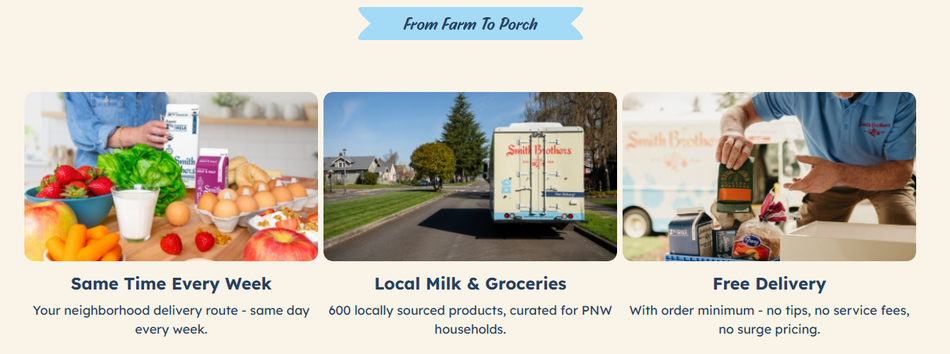
Most farm-run delivery services run on a set schedule, rather than an on-demand basis. It’s more of the classic milkman type of deal, where your delivery shows up every Thursday afternoon or Monday morning. Most services will determine your delivery day by your address because the schedule is location-based, but some will let you pick a day that works best for you. Many don’t require you to be home for delivery and will leave your groceries in an insulated box on your doorstep or porch.
Now that you have your date picked, what happens if you need to change something or cancel? While all delivery services will let you make changes to your order, they all have a set cut-off time for order adjustments. Generally, your order will be locked in around noon the day before the scheduled delivery, give or take a few hours, but this can vary across services. It’s not a huge deal, but it’s a good thing to keep in mind when doing your research on delivery options.
Selection
Last but not least, be sure to browse the products offered by the service. Some might offer a full range of pantry staples, meat, dairy, baked goods, produce, and even some household essentials. Others might offer only what they produce on their own farm. Some may have curated produce boxes or seasonal boxes packed with treats.
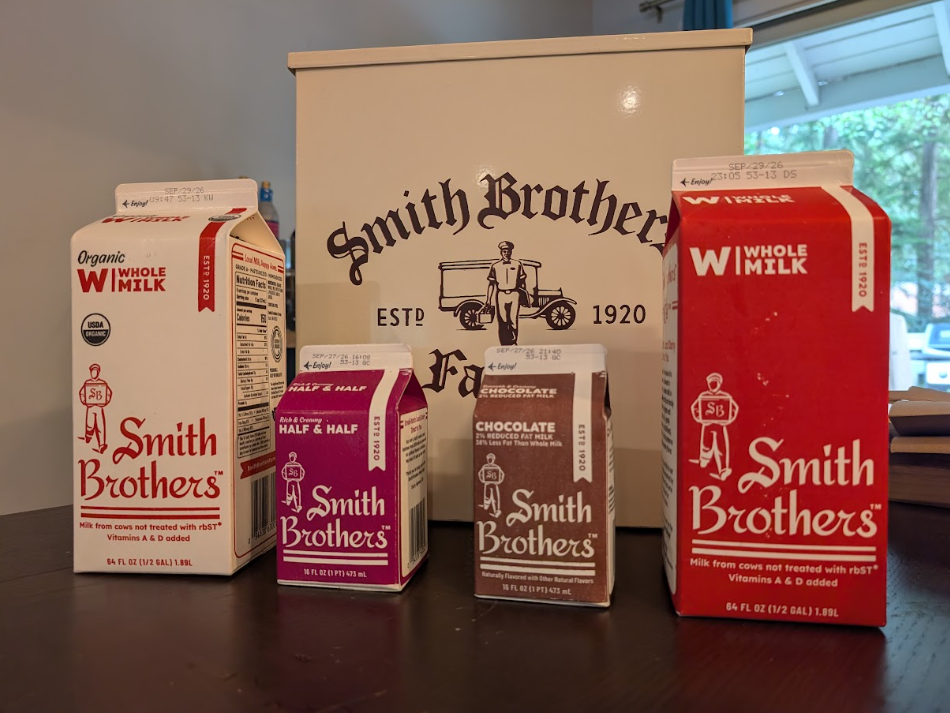
Depending on your needs, some delivery services may be a better fit for your household than others. Smith Brothers, for example, carries most of the staples you’d find in a grocery store, along with prepared meals, harvest boxes, pet foods, and their own high-quality dairy. Minnesota’s TC Farm collective sells organic dairy, produce, bread, and grass-fed meat produced by a small group of family-run farms. On the other hand, some smaller local farms and dairies, like North Dakota’s ERB Dairy, focus solely on their own farm-fresh raw milk and nothing else.
Is Milk Delivery Worth It for Your Household?

The answer is . . . it depends.
If your biggest concern is price per unit, shopping in person will always net you the biggest savings, whether it’s a couple of bucks or much more. And if you live near your preferred grocery store, the added fuel costs may be negligible.
On the other hand, if you don’t mind spending a little more in order to save the time you’d otherwise spend pushing a cart around, delivery may be a much better fit, especially if you find a service that checks all the right boxes: free delivery, low or zero service fees, adequate selection, and a convenient delivery schedule.
Other key considerations for your household may include organic or sustainable farming practices, curated produce boxes, access to local pantry goods like jams or potato chips, or prepared meals. I’d recommend doing a deep dive to see what’s available—you may be surprised by what your local milk delivery service offers.
The post Cost of Milk: Delivery vs Buying at the Store appeared first on Penny Pinchin' Mom.