58 minutes ago
1
58 minutes ago
1
The post 29 Freezer Meals So You Don’t Have to Think About Dinner After Baby Comes appeared first on Penny Pinchin' Mom.
Those first two weeks home with a new baby are not the time to figure out dinner. You’re nursing on one arm, running on no sleep, and chopping an onion sounds like climbing a mountain. I remember standing in my own kitchen decades ago with a newborn on my chest, staring at an empty pantry, wishing someone had told me to cook ahead.
This list hands you 29 meals for that stretch. Crock Pot White Chicken Chili goes from freezer to slow cooker with zero prep, Baked Ziti That Feeds a Crowd covers the whole meal train, and Loaded Baked Potato Soup reheats in one bowl you can eat one-handed while the baby sleeps on you.

1. Swap five name brands for Aldi store labels and stop there
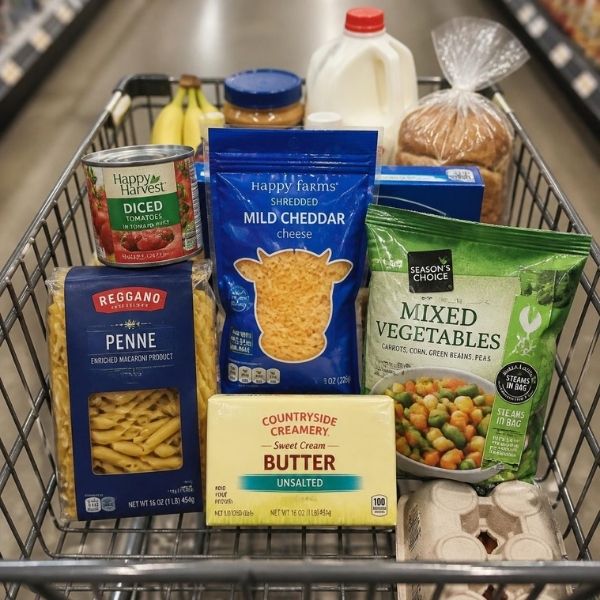
You don’t have to convert your whole cart. Pick the five items your family barely tastes the difference on and let the rest go. For most people, that’s canned tomatoes, shredded cheese, frozen vegetables, pasta, and butter.
At Aldi, an 8-ounce bag of shredded cheese runs about $2, compared to $3.50 to $4 for a national brand at the regular grocery store. Their pasta sits around $1 a pound. Buy those five things at Aldi weekly, and you’re saving roughly $8 to $10 a trip without anyone at your table noticing.
If someone does notice, that item goes back on the name-brand list permanently. One failed swap doesn’t undo the other four.
2. Shop the manager’s markdown meat rack before you shop anything else
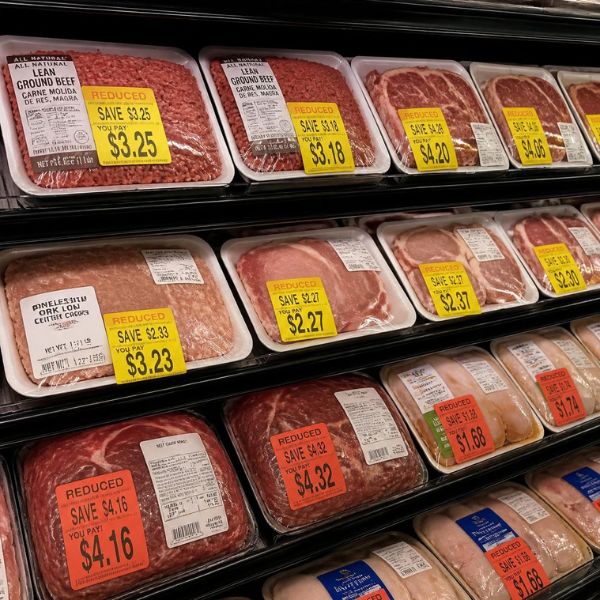
Every store has one, usually a small section near the back of the meat case with bright yellow or red stickers. Discounts typically run 30% to 50%, which turns $6.50-a-pound ground beef into something closer to $3.50 and makes pork loin worth buying again.
Back when we were paying off debt, I learned my Walmart marks down meat early in the morning, and my Hy-Vee does it in the evening. Ask a butcher when yours does it.
They’ll tell you.
The meat is fine; it’s just near its sell-by date. Cook it that night or freeze it the same day you bring it home. Two markdown packages a week is real grocery money.
3. Digital coupons in the store app, clipped in the parking lot
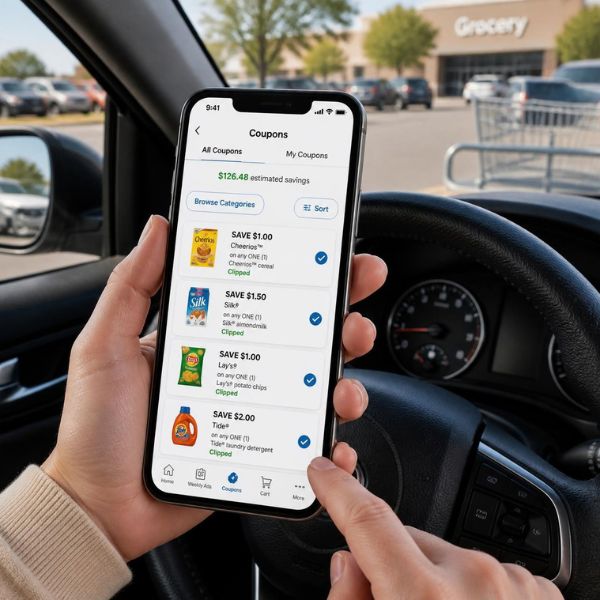
Sit in your car for five minutes before you walk in and clip whatever the store app is offering. That usually knocks $5 to $15 off a normal trip. The Kroger app, Walmart Cash inside the Walmart app, and Target Circle all stack their offers on top of the sale price, which store-brand shoppers often assume doesn’t apply to them.
Clip everything, even offers on items you don’t plan to buy. They only trigger if you actually purchase the product, so there’s no downside to clipping the whole page.
The one thing that trips people up is forgetting to enter their phone number at checkout. No phone number, no discount, and there’s usually no going back once the receipt prints.
4. Frozen vegetables instead of fresh for anything you’re cooking
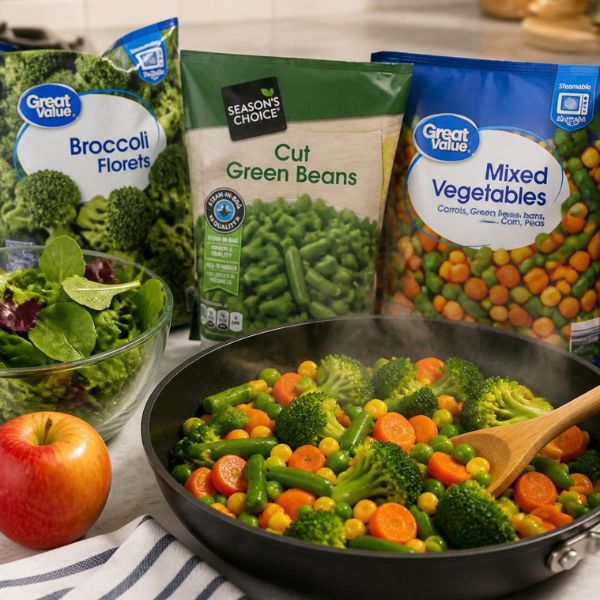
Nothing rots in your crisper drawer when the vegetables are already in the freezer. A bag of frozen broccoli, green beans, or mixed vegetables costs about $1.25 to $2.50 at Walmart or Aldi. Fresh broccoli at $2.50 a pound is only cheaper if you actually eat all of it, and most of us don’t.
Great Value and Aldi’s Season’s Choice bags are both frozen at peak and taste identical once they hit a skillet or a casserole.
Keep fresh produce for the things you eat raw, like salad greens and apples, and buy frozen for everything that ends up cooked.
5. Dried beans sound like too much work until you see the math
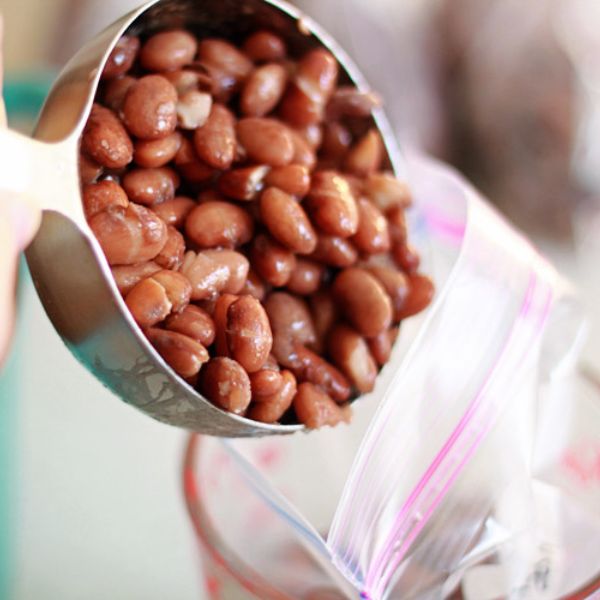
A one-pound bag of dried pinto or black beans runs about $1.50 to $2 and yields roughly the equivalent of six cans. Those same six cans cost you $7 to $9. That’s a $6 difference for one bag.
The work is genuinely minimal if you use a slow cooker. Rinse, cover with water, cook on low all day, done. No soaking required for most varieties, though it shortens the cooking time if you remember.
Freeze the cooked beans in two-cup portions in freezer bags, which is about what a can holds. Then you’re pulling them out of the freezer just as fast as opening a can.
6. Rebate apps that pay you for groceries you already bought
Ibotta and Fetch both cost nothing to use and work on receipts from any store. Ibotta pays on specific products, usually 25 cents to $2 each. Fetch just scans the whole receipt and gives points on everything, which adds up slowly but requires zero planning.
Cashing out once a quarter usually totals $40 to $70, enough to cover a Christmas gift or two.
The trap is buying something you didn’t need to earn a $1 rebate. That’s not saving, that’s spending. Only claim offers on items already in your cart, and the app becomes free money instead of a marketing tool aimed at you.
7. When the sale flyer decides dinner instead of your Pinterest board
Most of us plan meals first and then pay whatever those ingredients cost that week. Flip it. Pull up your store’s weekly ad Wednesday morning, find the two or three protein sales, and build your meals around those.
Chicken thighs at $1.29 a pound, pork shoulder at $1.99, whole chickens at $1.19 when they run them. Those numbers set your week.
A weekly planning session takes about twenty minutes once the flyer narrows the options. Fewer choices means faster decisions, and grocery totals typically drop by about $25 a week.
8. A $2.50 rotisserie chicken stretches across three dinners
The rotisserie counter is the rare spot in the store where cooked costs less than raw. Costco holds at $4.99, and Sam’s Club and most grocery stores run $6 to $8.
Night one is chicken with sides. Night two, the pulled meat goes into tacos, quesadillas, or a casserole. Then the carcass simmers in a pot of water with an onion and a couple of carrots for stock, which becomes soup on night three.
That’s roughly $2.50 per dinner for the protein. Store-bought stock alone runs $2 to $3 a carton, so the bones are worth keeping even if soup isn’t on the menu that week.
9. Dollar Tree spices at $1.25 a jar
The markup on grocery-aisle spices is enormous for what amounts to dried plant material. Jars there run $4 to $7. Dollar Tree carries garlic powder, chili powder, cinnamon, oregano, cumin, and paprika for $1.25 each.
The jars are smaller, which is honestly better. Ground spices lose their punch after about a year anyway, so buying a big container of something you use twice a year is money burned.
Buy the six you actually cook with and skip the rest. Aldi also carries a decent spice line in the $1.50 to $2 range if their selection covers what you need better.
10. Shop your own pantry one week a month
Pick a week and buy only perishables. Milk, eggs, produce, bread. Everything else comes out of what’s already in your cabinets and freezer.
The first time I tried this, I was sure we’d starve by Wednesday. We ate for six days on food I’d forgotten I owned, and my grocery bill that week was about $35 instead of $150.
You’ll eat some odd combinations. That’s fine. It clears out the freezer, uses the pasta sauce you bought on sale eight months ago, and gives you a genuine picture of what you’ve been overbuying.
Do it the last week of the month when the budget is tightest anyway.
11. If your bread costs more than $3, find the day-old rack
Most stores keep a discount bread cart somewhere near the bakery. Bakery outlets exist in a lot of areas too, where brands like Bimbo or Sara Lee sell for $1 to $2 a loaf instead of $3.50 to $5.
Bread freezes beautifully. Buy four loaves at the discount price, freeze three, and pull them out as you need them. It thaws on the counter in about an hour.
The same rack usually has hamburger buns, English muffins, and tortillas at similar discounts. Tortillas normally run $2.50 to $3 a pack, so grabbing them at half that is worth the trip on its own.
12. Unit price is printed on the shelf tag, and it’s the only number that matters
That small print on the left side of the price tag tells you the cost per ounce or per pound. Bigger packages are usually cheaper per unit, but not always, and stores count on you assuming they are.
Twelve-count paper towels have been priced higher per sheet than the six-count on sale that same week. The 32-ounce yogurt tub at about $3.50 often beats individual cups by half.
Comparing takes about three seconds once you know where to look, and it consistently saves 10% to 20% on staples like rice and cleaning supplies.
13. Crock Pot White Chicken Chili
When a weeknight needs to cook itself, this is the one I reach for. Two cans of great northern beans run about $1.30 each, two boneless chicken breasts come in around $4, a jar of Aldi salsa verde is about $2.50, and a block of cream cheese adds another $2.50. With a cup of frozen corn, the whole pot costs $12 and feeds six, so you’re at roughly $2 per bowl.
Prep is ten minutes. Everything goes in raw, cooks on low for six hours, and you shred the chicken right in the pot before stirring in the cream cheese.
The leftovers reheat beautifully for lunches all week, which matters more than usual in those first sleep-deprived weeks.
14. Ground Beef Taco Rice Skillet
This is how one pound of ground beef covers six people. Beef runs over $6 a pound now, so the rice does the heavy lifting. Brown the beef with an onion, stir in a cup of dry rice, a can of black beans, a can of diced tomatoes with green chiles, and two cups of water, then simmer covered for 20 minutes and top with shredded cheese until it melts.
Around $11 for six generous servings, under $2 each. Ten minutes of prep, 30 minutes total, one skillet.
The rice absorbs the beef drippings and seasoning, so a single pound tastes like two. Crushed tortilla chips on top give you the crunch without buying taco shells.
15. Smoked Sausage and Peppers Pasta
Twenty-five minutes start to finish, and dinner is on the table. A rope of Aldi smoked sausage runs about $4, a pound of penne is around $1.50, a bag of frozen pepper and onion blend costs about $2.50, and a jar of store-brand marinara adds $2.
Slice and brown the sausage while the pasta boils, toss in the frozen peppers to cook in the sausage fat, then stir everything together with the sauce. About $10 feeds six people, which lands right at $1.65 a plate.
Smoked sausage is already fully cooked and heavily seasoned, so you skip both the long cook time and the spice rack. A handful of shredded mozzarella on top stretches it further.
16. Slow Cooker Pork Carnitas
Pork shoulder is still the best deal in the meat case. It sells for about $2 a pound, so a four-pound roast comes to around $8. Rub it with cumin, chili powder, salt, and the juice of an orange, then let it go on low for eight hours until it shreds with a fork.
Add a pack of tortillas for about $3, and you’re at roughly $14 for eight servings, right around $1.75 each.
This one freezes and reheats well enough to serve three different ways across a few days. Crisp the shredded pork under the broiler for five minutes before serving. Those browned edges are what make it taste like a restaurant.
17. Baked Ziti That Feeds a Crowd
I doubted a pan of pasta could carry a real Sunday dinner until I started browning a half pound of Italian sausage into the sauce instead of a full pound of beef. Sausage costs about $4 and carries more flavor per ounce.
A pound of ziti is about $1.50, two jars of sauce run about $4, a tub of ricotta is around $3, and 8 ounces of shredded mozzarella costs $3 to $4. Everything together comes in at around $15 and feeds eight, close to $1.90 a serving.
Fifteen minutes of prep, 35 minutes at 375. Assemble it in a disposable foil pan and freeze one unbaked for a night when you have nothing left to give.
18. Red Beans and Rice with Ham
Dried beans are still the cheapest protein in the store. A one-pound bag of red beans costs about $1.50 and feeds eight people. Add a smoked ham hock or a leftover ham bone for about $3, an onion, a couple of bay leaves, and rice at pennies a serving.
The whole pot runs under $7, which puts it at less than a dollar per plate. Soak the beans overnight, then simmer three hours on the stove or six hours in the crock pot.
Mash a cup of the cooked beans against the side of the pot and stir them back in. That thickens the whole thing without a drop of cream.
19. Swap Dryer Sheets for Wool Dryer Balls
Wool dryer balls cut drying time by roughly a quarter, and a six-pack is about $10 in the laundry aisle at Target. They bounce through the load and separate wet clothes so hot air moves through the fabric instead of around a tangled ball of it. Fewer minutes on an electric dryer is real money across a year, and they replace dryer sheets too, which saves another $5 every couple of months.
If you miss the scent, put three drops of essential oil on a ball and let it sit a minute before tossing it in so it doesn’t spot your clothes.
20. Shrink Film the Windows in Your Coldest Room
If one room in your house sits five degrees colder than the rest, the windows are usually the reason. A Duck brand shrink film kit covers five windows and comes in at around $12 at Walmart. You tape it around the frame, then run a hair dryer along the surface until it pulls tight and turns nearly invisible.
Plan on 20 minutes per window your first time and half that once you find the rhythm. The trapped layer of air is what insulates, the same idea as a second pane of glass for a tiny fraction of the price. Two kits handle most main floors.
Wipe every frame with rubbing alcohol before you tape, or the adhesive will let go sometime in February.
21. Replace the Bulbs You Leave On Longest
It’s easy to put off swapping bulbs when you remember the dim, slow-to-brighten LEDs from a decade ago. The ones on shelves now are nothing like that. A Great Value eight-pack of soft white LEDs is about $10 at Walmart, a little over a dollar per bulb.
Each one pulls roughly 85 percent less electricity than the incandescent it replaces and lasts years, so you’re not hauling out the step stool every few months. Start with the fixtures that run longest: kitchen, living room, porch light.
Buy 2700K if you want the warm yellow glow of the old bulbs. Save 5000K for the garage or laundry room, where the whiter light actually helps.
22. Mix One Spray Bottle Instead of Buying Three Cleaners
One bottle under your sink can replace most of what’s crowding it now. A gallon of white vinegar is about $4 at Aldi, and a Dollar Tree spray bottle is $1.25. Half vinegar, half water, plus a squirt of Dawn handles counters, appliance fronts, and the inside of a microwave that’s seen better days.
Compare that to $4 or so per bottle of Method or Mr. Clean. A single gallon stretches across months of refills.
Vinegar dulls granite and marble over time, and it’s no better on hardwood. Plain warm water with a drop of dish soap does fine on those. Label the bottle in permanent marker so nobody grabs the wrong one.
23. Buy Furnace Filters Six at a Time
Nobody thinks about a furnace filter until the one in the unit has gone grey. That’s how you end up paying $12 to $15 for a single filter at the hardware store. A six-pack of pleated filters runs about $30 on Amazon, roughly $5 each.
A clogged filter forces the blower to work harder, which shows up on your utility bill and shortens the life of a system that costs thousands to replace. Measure the filter in there now and write the size on the inside of the furnace door so you never stand in the aisle guessing again.
Standard 1-inch filters need changing every 90 days, sooner with pets. Set a recurring phone reminder for the first of the month each quarter, because nobody remembers this on their own.
24. Put a Low-Flow Head on the Shower Everyone Uses
Even die-hard skeptics of anything labeled low-flow rarely notice the switch. The Niagara Earth Massage head is about $15 on Amazon and moves roughly 1.5 gallons a minute instead of the 2.5 a standard head pushes.
Less hot water leaving the pipe means less water your heater has to warm back up, and that reheating is where the savings actually live. Installation takes five minutes and a strip of plumber’s tape that costs a dollar.
Hotels have used these for years and guests never say a word. If your current head is more than ten years old, the difference should show up on your next water bill.
25. Turn the Water Heater Down to 120 Degrees
For anyone who has never touched the dial on the water heater, it’s likely still set at 140 from the factory. Dropping it to 120 costs nothing and trims about $5 a month off the bill, because the tank isn’t straining to hold water hotter than anybody actually bathes in. It also removes the scalding risk for little hands at the bathroom sink.
On a gas unit, the dial sits at the bottom front. On electric, you’ll pull a panel and need a screwdriver.
Give it a full day before you decide anything. If the dishwasher starts leaving film on your glasses, nudge it back up ten degrees and leave it there.
26. Hang the Heavy Stuff on a Folding Rack
A drying rack pays for itself in roughly two months of skipped dryer cycles. The Honey-Can-Do wood rack is around $30 at Target, while IKEA’s smaller MULIG is closer to $12 if you’re only hanging shirts and lightweight items.
Line-dried clothes also hold up longer. All that lint in your dryer trap is your clothing slowly wearing away.
A rack tucked in the laundry room comes out on wash day for sheets. Jeans, towels, and hoodies are the pieces worth hanging, since they’re what keeps the dryer running the longest.
27. Black Bean and Rice Bowls
Cook a pot of rice while you warm a can of black beans with cumin and garlic powder. Add frozen corn, diced tomatoes, and whatever cheese you have on hand. The whole thing comes in at around $6 for 4 servings, about $1.50 each. Prep and cook time together is under 20 minutes. Rice and beans are about as cheap as groceries get, and it still eats like a real dinner. Add a squeeze of lime if you have one sitting in the fridge.
28. One-Pot Cheesy Taco Pasta
Brown a pound of ground beef, stir in taco seasoning, diced tomatoes, and uncooked pasta with just enough broth to cook it through. Everything simmers together in one pot for about 15 minutes, then gets topped with shredded cheese. Total cost lands around $9 for 5 servings, under $2 each.
It freezes flat in a gallon bag if you pull the pasta a couple of minutes shy of done, and it thaws overnight in the fridge and warms back up on the stove with a splash of milk to loosen the sauce. When my kids were little, this was the meal I made on the nights nobody had energy for more than one pot to wash. Leftovers taste just as good the next day.
29. Loaded Baked Potato Soup
Bake or microwave potatoes until soft, then mash them into a pot with milk, a bit of butter, and shredded cheese. Stir in crumbled bacon bits and green onion if you have them. This recipe serves 6 for about $8 total, roughly $1.35 a serving. Prep is about 10 minutes with 20 minutes of cook time.
Potatoes are one of the cheapest fillers at the grocery store, and a five-pound bag that’s starting to sprout eyes is exactly what this recipe is for. Leave the skins on two or three of them for texture. My grandkids ask for it with extra cheese and no green onion, which I have made my peace with.
Dinner’s Already Handled
Those newborn days will still bring the exhaustion and the one-armed everything, but dinner doesn’t have to be part of what wears you down. A stocked freezer means one less mountain to climb when you’re running on no sleep with a baby on your chest.
Start with Slow Cooker Pork Carnitas if you want a meal that makes itself; try Baked Ziti That Feeds a Crowd when family is coming to help and needs feeding too, or stash Loaded Baked Potato Soup for the nights you need something warm and one-handed. Pick a few recipes, spend one afternoon before baby arrives, and fill that freezer. Future you, the one running on fumes and love, will be so grateful you did.
The post 29 Freezer Meals So You Don’t Have to Think About Dinner After Baby Comes appeared first on Penny Pinchin' Mom.