10 minutes ago
2
The post 26 Kids Organization Hacks That Actually Survive Real Kids appeared first on Penny Pinchin' Mom.
You’ve set up the bins, labeled the shelves, maybe even color-coded the whole closet. By day six, clothes are on the floor, and the bins are empty shells. I built my grandkids a gorgeous art station once, complete with lidded containers sorted by color and type. It lasted until the first project, when a four-year-old needed scissors in under ten seconds.
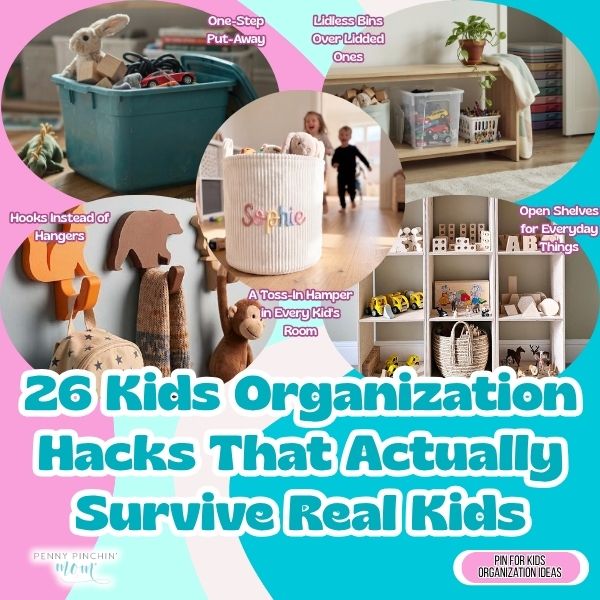
These 26 kids organization hacks are grouped by what actually breaks a system. If putting a toy away takes more than one motion, it won’t happen, so every idea here is built around a single motion. Lids come off. Hooks replace hangers, because a hoodie on a hook is a hoodie off the floor.
When the System Has Too Many Steps
1. One-Step Put-Away
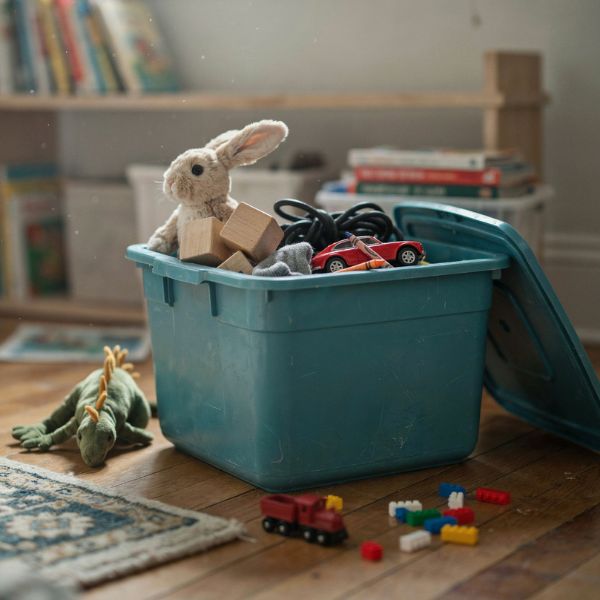
Count the motions it takes to put one toy away. Walk across the room, lift a lid, sort by type, close the lid: that’s four steps, and a kid will do it twice before the pile behind the couch starts up again. One motion is the whole rule. Drop it in, hang it up, done.
Cost is $0, because this isn’t a product. It’s the filter you run every other idea through. Before you set up any of the kids’ organization hacks below, ask how many motions it takes. If the answer is more than one, simplify it or skip it.
For the bigger picture on clearing out what’s left, see 5 Tips To Declutter and Organize Kids’ Rooms (and Playrooms). The photo here shows a real bin, mid-week, not styled.
2. Lidless Bins Over Lidded Ones
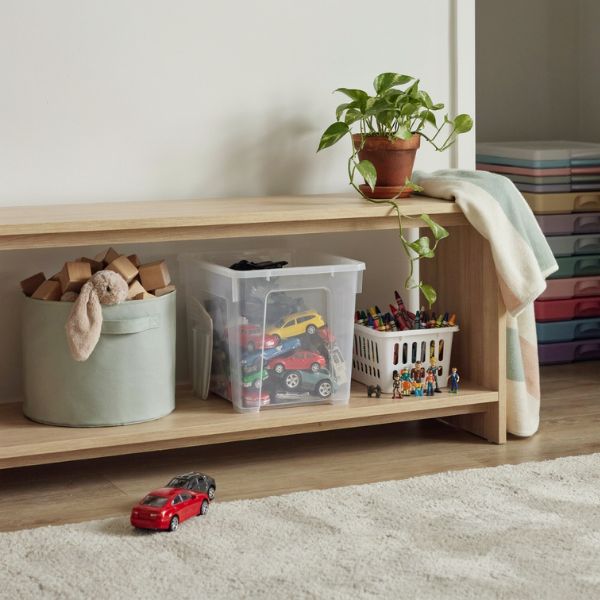
Lids are where kids’ room organization quietly dies. A lid adds two motions, off and back on, and it gives a child a reason to set the toy on top of the bin instead of inside it.
Pull the lids off the bins you already own and store them flat in a closet in case you need them later. That’s $0 and about five minutes of work. If you’re buying, open fabric or plastic bins run about $6 to $12 each at Target, and the small open bins at Dollar Tree cost right around a dollar apiece for little things like cars and figures.
The bin never asks for a decision. The opening is always there.
3. Hooks Instead of Hangers
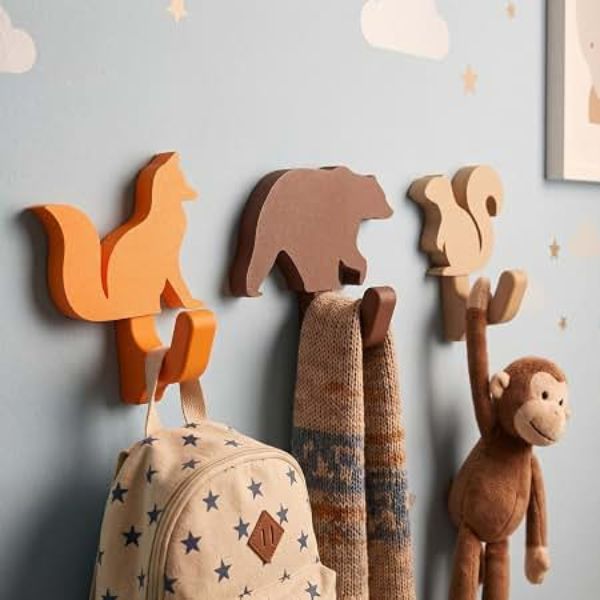
Hangers ask a kid to pinch, line up two shoulders, and slide a rod. Most of them will drop the hoodie on the floor instead, and nobody can really blame them. A hook asks for one motion. Adhesive hooks like Command hooks cost around $8 for a multi-pack at Target, and plan on two or three per kid: one for the coat, one for the backpack or robe, one spare. If you have screw-in hooks or an old towel bar sitting in the garage, that’s $0.
Use hooks for the things a child grabs daily and leave hangers for church clothes. The daily stuff is where the floor pile comes from, and a hook takes care of it in a single swing.
4. A Toss-In Hamper in Every Kid’s Room
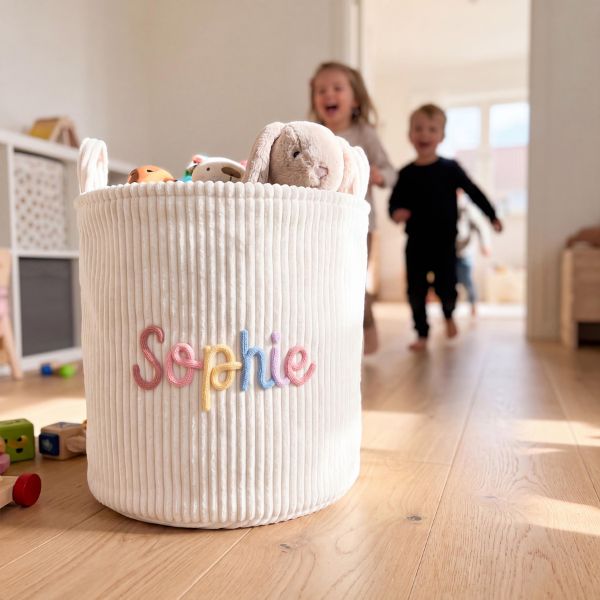
When my kids were little, we had one hamper for the whole upstairs, and somehow it was always three doors away from whoever had just peeled off socks. Those socks stayed on the floor for days.
One hamper per kid, in that kid’s room, is the fix. A laundry basket you already own works fine, $0. A pop-up mesh hamper comes in under $15 at Walmart, and it’s light enough that a child can drag it to the laundry room themselves.
No lid, no liner bag to wrestle. The whole system is “open container within throwing distance.”
5. Open Shelves for Everyday Things
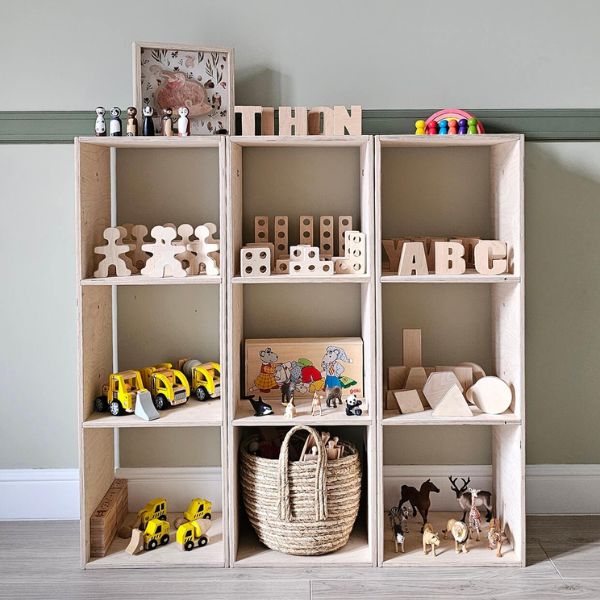
Cabinet doors and deep drawers hide things, and hidden things get dumped out in a search and left out. Open shelving keeps the everyday stuff visible, and one reach away.
Use the bookcase or cube shelf already in the room, $0, and give the bottom two shelves to the items used daily. Save the top shelves for things you hand down, like board games with small pieces.
Safety first: any shelf, bookcase, or dresser tall enough to tip over has to be anchored to the wall. Anti-tip kits cost about $10 at Walmart or Amazon, and most furniture comes with one in the hardware bag. Do this before you load the shelf, not after.
Visible and within reach.
6. Take the Closet Door Off the Track
Those bifold closet doors jam, pinch fingers, and come off the track roughly every other week. A kid who has to fight a door will drop the shoes in front of it instead.
Lift the doors out, store them flat behind something in the garage, and hang a curtain on a tension rod if you want the closet covered. $0 if you already own a rod and a spare curtain panel, or about $10 to $15 for a tension rod at Walmart.
This is one of the kids’ organization ideas that pays off most in small kids’ room organization, where a swinging door eats floor space anyway. With the door gone, the closet becomes open shelving, and open shelving gets used.
7. One Big Dump Bin Instead of Five Sorted Ones
Sorting is a step, and it’s the step kids skip first. Five labeled bins for cars, blocks, animals, figures, and “random” means five decisions per item, and by Thursday everything is in the wrong bin anyway.
Kids clean up faster with one oversized bin in the family room than with a sorted setup. Everything loose goes in. That’s it.
$0 if you have a large tote or laundry basket, or about $10 for a big open tote at Walmart. One bin per shared space.
Sorting can happen on a rainy afternoon with you helping. Daily cleanup should never require a child to categorize anything.
8. Keep Storage Where the Mess Happens
A bin in the bedroom does nothing for the toys that live on the living room floor. Distance is a step, and a long walk is several.
Put a container wherever the activity actually happens: a basket beside the couch, a bin under the coffee table, a shoebox-sized container next to the spot where they build. All $0 if you shop your own cabinets, and an old dish tub or a shoebox with the lid tossed works fine.
The rule is that the child shouldn’t have to leave the room to clean the room. When the container is within arm’s reach of the mess, cleanup becomes something that happens during play instead of a separate event you have to announce.
9. Rolling Under-Bed Bins With No Lids
Under-bed space is the most wasted square footage in any kid’s room, and lidded storage boxes under there are a lost cause. Lifting the lid while lying on the floor is not happening. Shallow bins on casters slide out with one pull. Expect to pay about $15 to $20 each at Target, and two per bed is plenty. Check secondhand shops or garage sales first, since these turn up there often for just a couple dollars. Leave them open on top. The child pulls the bin out, drops things in, and pushes it back with a foot. Two motions total, and the floor under the bed stops being a graveyard.
When the System Is Built at the Wrong Height
10. Kid-Height Hooks
Hang the hooks at your child’s shoulder height, not yours. Measure the shoulder of your shortest kid, mount there, and give each child two hooks of their own, one for a coat and one for a backpack or a robe.
A six-pack of Command hooks runs about $10 at Target, or $0 if you have spares in a drawer. The height is the entire fix. A hook mounted eighteen inches too high turns hanging up a coat into a jump-and-miss, and a coat that misses lands on the floor.
At shoulder height, it’s one motion, no stretching and nobody to ask for help.
11. Lower the Closet Rod
A tension rod hung below the existing closet rod gives a kid a bar they can actually reach. Spring rods sized for a standard closet land around $10 to $15 at Walmart, and one rod handles everyday shirts and pants for one child. Dressy and off-season clothes stay up top, out of reach and out of the way.
Small kids’ room organization lives or dies on vertical space, and a second rod doubles your hanging without adding a single piece of furniture.
Putting a shirt away no longer requires an adult. Check the weight rating before you load it, and if the rod starts to sag, swap in a mounted bracket set.
12. A Step Stool Station at the Sink
Kids will drag a dining chair over to the sink if there’s nothing else to stand on, which is exactly as safe as it sounds. A two-step stool with a non-slip top costs around $15 to $25 at Target or Walmart. One in the kitchen plus one in each bathroom covers the whole house.
Parked in the same spot every single time, the stool becomes part of the room instead of something to haul around. Hand washing, tooth brushing, rinsing out a cereal bowl, none of it needs a grown-up anymore. Systems break when a kid has to ask for help first. Asking is a step.
13. Do the Tape Test Before You Mount Anything
Before you drill a single hole, put a strip of painter’s tape where you think the hook, rod, or shelf should go. Then have your child walk over with a coat in hand and touch it.
Nine times out of ten, you’ll move it down three or four inches. A roll of painter’s tape costs about $5 at Walmart, and if there’s already one in the garage, call this $0.
Adults mount things at adult eye level without thinking twice, and that one habit is behind a lot of failed kids’ room organization. Test the height first, and it’s right before anything is permanent.
14. Give Kids the Bottom Two Shelves
Back when my three were home, the hall bookcase held my things at eye level and theirs on the top shelf, which is how the books ended up living on the floor.
Flip it. The bottom two shelves belong to the kids, always, and anything they rarely touch moves above their reach. Cost is $0 since you’re only shifting what’s already on the shelves.
A child can pull a book out and slide it back in one motion at that height. Use an already-anchored bookcase for this, and keep each low shelf to one category, books on one and games on the other, so nothing needs sorting to go back.
15. Move the Towel Hook Down
Wet towels end up on the bathroom floor because the towel bar is mounted for a six-foot adult. Add a hook at your child’s shoulder height instead, one per kid, right beside the tub or sink they actually use.
A two-pack of adhesive hooks comes in under $8 at Target, or $0 if you have leftovers from another project.
A hook beats a bar for the same reason it does in the closet. A kid can throw a towel at a hook and hit it, while draping one neatly over a bar takes two hands, some aim, and more patience than anyone has at bedtime. Give each child a different color towel so nobody has to sort them afterward. Wipe the wall with rubbing alcohol before sticking the hook.
16. A Mirror and Brush Spot at Their Level
Getting dressed independently falls apart at the mirror, because the only one in the house hangs over a sink a child can’t see into.
A lightweight adhesive or over-the-door mirror goes for about $12 to $18 at Walmart, hung so the top edge sits just above their head. Underneath it, set a small bin holding a brush, hair elastics, and chapstick on a low shelf or the floor, $0 if you repurpose a bin from somewhere else in the house.
Hair, face, and everything else happens at one height in one place, so the morning routine stops needing a parent as the middle step. One bin per kid if they’re sharing the mirror.
17. A Light They Can Turn On Themselves
A dark closet is a closed closet. When the switch or pull chain sits above a child’s reach, they’ll drop things at the closet door rather than walk into it, and nothing you organized in there matters.
A three-pack of battery-powered tap lights or stick-on LED pucks totals maybe $12 to $15 on Amazon. Mount one inside the closet at the child’s shoulder height.
A kid will stand at the edge of a dark closet and simply decline to enter, which is honestly fair. One press on, one press off, nobody consulted. Fresh batteries once or twice a year keeps it going.
When Things Don’t Have a Home
18. Picture Labels for Kids Who Can’t Read Yet
A bin with no label is just a place things go to disappear. Tape a photo or a quick drawing to the front of every bin, one label per bin, facing out at the spot a child actually looks when she’s standing over it. This costs $0 with index cards, a marker, and clear packing tape you already own. If you want something sturdier, a Brother P-touch label maker sits around $25 to $30 at Walmart, though handwritten works exactly as well.
The bin has a real home attached to it now, and a pre-reader can find it without asking an adult. Let the kids draw the labels. They remember their own pictures better than anything you print.
19. A Backpack Landing Zone
Backpacks land wherever the kid stopped walking, which is usually three feet inside the door. Fix it by naming one square of floor and one hook as the landing zone, and never using that hook for anything else. One hook per child. $0 if you have a free hook already, or a pack of Command hooks lands around $8 to $10 at Target.
The backpack has an address now, so there’s no decision to make at 3:15 when everybody is hungry and loud. Put the landing zone where they naturally stop, not where it looks tidiest to you. A hook in the perfect spot on the wrong wall gets ignored by day four.
20. One Shoe Spot by the Door
For about a decade, our entryway was a shoe pile with a house attached. What finally worked was giving shoes a bounded spot instead of a rule about shoes.
Use a boot tray, an old baking sheet, or a shallow bin you already have, which makes this $0. A plastic boot tray at Walmart comes to about $12 to $15 if you’d rather buy one. One tray per door the kids actually use, not one for the whole house.
The tray works because it’s a visible edge. Shoes inside the tray are put away, shoes outside it are not, and a four-year-old can judge that without help. For more on the pile, see our shoe organization ideas for a house where every pair ends up by the door.
21. School Paper Triage: Keep, Display, Toss
Paper piles up because incoming paper has no home, only a countertop. Give it three homes and sort the day it walks in: a folder for keep, a clip or clothespin for display, and the recycling bin for toss. $0, using a folder and a binder clip you already have.
Thirty seconds per kid per day beats an hour in May. There’s no fourth pile called “decide later,” which is the pile that eats your kitchen island. Our full system lives in How to Organize Kids School Papers & Artwork, including what’s genuinely worth saving long-term.
22. Artwork Rotation
Hang three or four clipboards in a row, or run a string with clothespins, and that’s your gallery. New art goes up, old art comes down, and either goes in the keep box or the recycling. $0 with clipboards and string from around the house. If you want the wall to look finished, a simple document frame goes for about $8 to $12 at Target.
Give each kid one flat keep box, something shoebox-sized, stored under the bed. The display space is capped. When the clipboard is full, something has to come down, and the kid can run that swap without you refereeing which drawing matters most.
23. An Art Cart
Markers, glue sticks, googly eyes, and half-finished projects migrate across the whole house when they don’t live anywhere. A rolling three-tier utility cart solves it. Art cart organization for kids works best loose: one tier for paper, one for drawing supplies, one for the messy stuff. The IKEA Raskog cart runs around $45 to $55, and Target’s rolling utility carts land in the $40 to $60 range.
This is the one item on the list likely to cost real money, and it earns it in small kids’ room organization where there’s no craft closet to spare. The cart rolls to the table and rolls back, so cleanup is one trip instead of twelve.
24. A Library Book Bin
Library day used to end with me on my hands and knees at 9 p.m., checking under three different beds for a book with a due date. One bin fixed it. Everything from the library goes in that bin, and nothing else does.
Use a laundry basket, a dishpan, or any bin already sitting empty in the house. $0. Keep it by the door or in the main living space, somewhere visible rather than tucked in a bedroom.
Returning books stops being a search. You grab the bin on the way out, and the kids can load it themselves without reading a single word.
25. A Sports Gear Bin for Each Kid
Cleats in the car, shin guards under the couch, and one lonely mouthguard in the dishwasher. Sports gear needs its own container, or it spreads. One bin per kid, labeled with their name or their color, stored by the door to the garage.
Repurpose a laundry basket or a milk crate, and this is $0. Buying new, a large open storage bin sits around $8 to $12 each at Target or Walmart.
Keep the bins lidless and oversized. Gear gets thrown in sweaty and in a hurry, and a bin that’s slightly too big survives that treatment. Everything for Saturday’s game lives in one place by Friday night.
26. A Lunchbox and Water Bottle Station
Clear one shelf near the dishwasher and declare it lunch gear only. Lunchboxes, water bottles, lids, and the reusable containers all land there, nowhere else. $0 if you just empty a shelf, or a small open bin to corral the lids comes to about $8 at Target.
This matters more than it sounds like it should. Water bottle lids are the single most frequently lost object in a house with school-age kids, and they get lost because they have no home. Once the shelf exists, unpacking the lunchbox becomes one trip from backpack to sink to shelf, which is short enough that a kid will actually do it.
Systems That Survive Your Real Kids
That gorgeous color-coded art station taught me that kids don’t break systems on purpose. They just move faster than a lid, a hanger, or a sorted bin ever can. The struggle isn’t you. It’s organization built for how a house should work instead of how your family actually moves through it.
Start with the One Big Dump Bin if labeled bins keep coming back empty. Try Hooks Instead of Hangers if the closet floor is where clothes go to die. Or set up the Backpack Landing Zone if mornings are a scramble for shoes and folders. Pick one or two, put them where the mess already happens, and give them a week. You don’t need a perfect system. You need one that works with the kids you’ve actually got.
The post 26 Kids Organization Hacks That Actually Survive Real Kids appeared first on Penny Pinchin' Mom.