1 hour ago
1
1 hour ago
1
The post 17 Ways to Fix a Freezing Bedroom That Blankets Never Solved appeared first on Penny Pinchin' Mom.
Some rooms stay cold no matter what the thermostat says, and the bedroom is usually the worst offender. One January I carried a third blanket up to our room, then a fourth, and still woke at 3 a.m. with my nose cold. I finally sat on the floor with a lit candle and watched the flame lean sideways toward the hallway. The draft was coming in under the door the whole time, and no stack of blankets was ever going to fix that.
This list sorts what actually warms a room from what only looks cozy. Fixing a winter bedroom starts with a door draft stopper and a window insulation film kit, because sealing a gap beats adding a blanket every time. Thermal curtain panels and a layered area rug come next. Flannel sheets and a wool blanket under the comforter are what make the bed worth climbing into.
Making It Actually Warmer
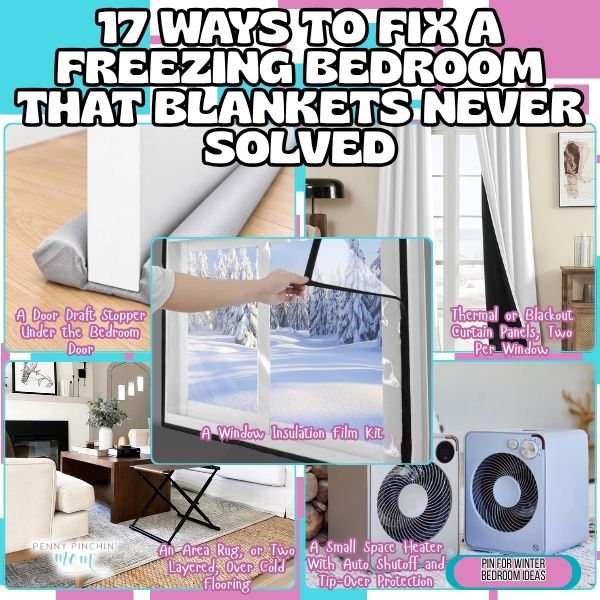
1. A Door Draft Stopper Under the Bedroom Door
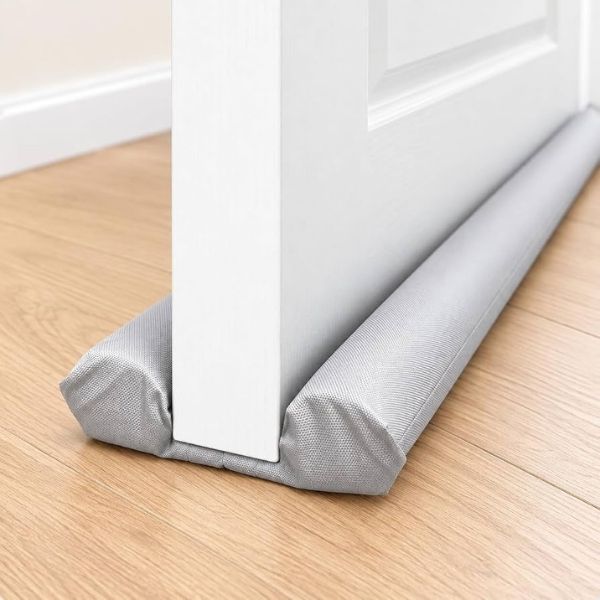
The gap under a bedroom door pulls cold hallway, stairwell, or basement air in all night long, and sealing it is the cheapest real fix on this list. A double-sided draft stopper that slides along with the door sells for $10 to $20 at Walmart, Target, or Amazon, and it takes maybe five minutes to size and slip on. Measure the door width first. Most fit 32 to 36 inches and can be trimmed with scissors.
Seal that gap, and the room’s temperature actually moves. If you sew even a little, a fabric tube filled with rice or dried beans does the same work for a couple of dollars.
One note for this whole section: prices swing by region and by size, so treat every range as a starting point.
2. A Window Insulation Film Kit
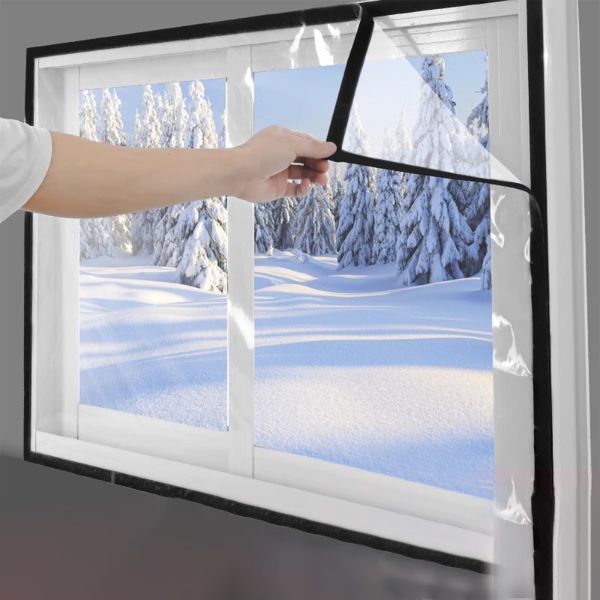
Our first house had an upstairs bedroom with two big single-pane windows, and I remember standing in front of them in December, feeling cold roll off the glass like someone left the refrigerator open. Shrink film did more for that room than anything decorative we tried.
A Duck brand window insulation kit covers around five standard windows for $15 to $25 at Walmart, Amazon, or any hardware store. Budget 20 to 30 minutes per window the first time you do it, less after that.
Wipe the frame with rubbing alcohol so the tape grips, press on the film, then shrink it tight with a hair dryer until the wrinkles disappear. It traps a pocket of still air against the glass, which is real insulation, and it peels off in spring.
3. Thermal or Blackout Curtain Panels, Two Per Window
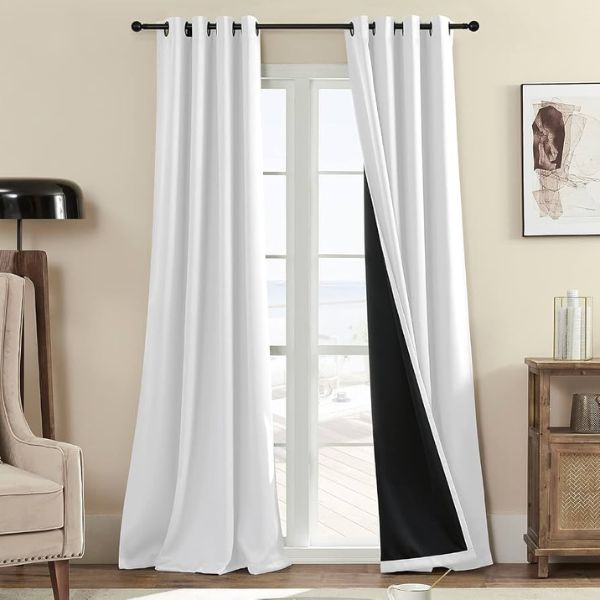
Heavy curtains do genuine thermal work, but only when they’re closed and only when they actually cover the window. Thin decorative panels hung narrow do nothing at all.
Expect $30 to $60 per panel for thermal or blackout curtains at Target, with cheaper options in the Mainstays line at Walmart. Buy two panels per window so the pair meets in the middle when drawn.
Hang the rod four to six inches past the window frame on each side and several inches above the trim, and let the panels reach the floor or pool slightly. The wider and longer the coverage, the more cold air gets trapped behind fabric instead of drifting into the room. A blackout liner adds weight and helps with early winter darkness too.
4. An Area Rug, or Two Layered, Over Cold Flooring
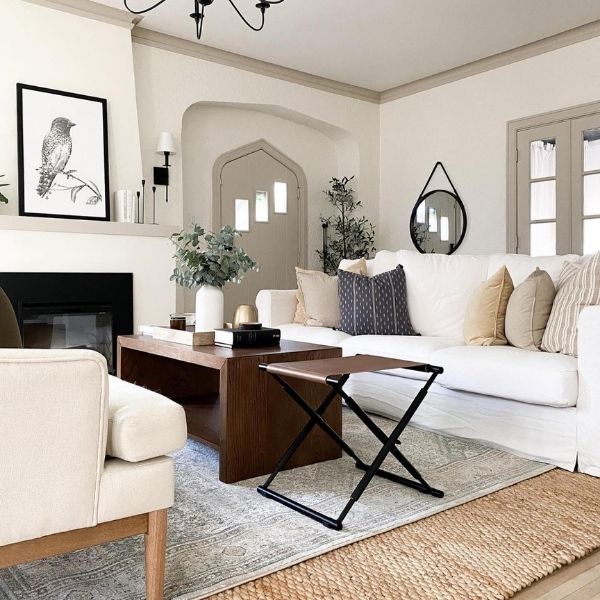
If your feet hit hardwood, laminate, or tile at 6 a.m. and you flinch, that floor is costing you comfort every single morning. A 5×7 to 8×10 rug will set you back $50 to $150 at Walmart, Amazon, or Target, and the felt rug pad underneath, another $20 to $30, is doing most of the insulating.
One large rug positioned so it extends 18 to 24 inches past the sides of the bed covers where you actually step. Two smaller rugs layered, a flat jute base with a softer rug on top, get you the same effect for less if you shop clearance.
This is a real fix, especially over a crawl space or slab. It also cuts the echo a cold, hard-floored room tends to have.
5. A Small Space Heater With Auto Shutoff and Tip-Over Protection
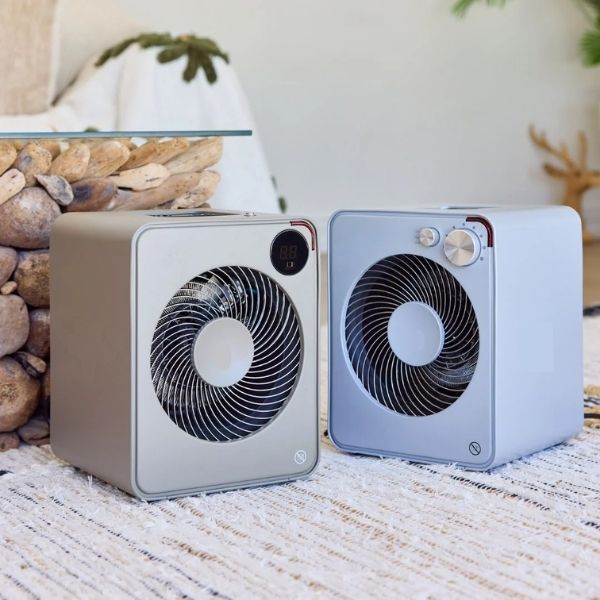
Keeping the thermostat low overnight and running a small heater in just the bedroom for twenty minutes before bed warms the one room you’re actually using instead of the whole house. A ceramic model from Lasko or Dreo runs $30 to $50 at Target, Walmart, or Amazon.
Buy only one with automatic shutoff and tip-over protection. Plug it straight into a wall outlet, never an extension cord or power strip; keep three feet of clear space around it, and never run it unattended or overnight near bedding or curtains.
Pair it with your thermostat schedule. Program the house to warm up 30 to 45 minutes before bedtime and again before your alarm, so the heater only has to top off one room.
6. A Door Sweep on Any Door Leading to Unheated Space
Some bedrooms have a door the rest of the house doesn’t: one to a garage, an enclosed porch, an attic stair, or a basement landing. Those doors leak steadily, and a slide-on draft stopper won’t survive a door that gets used every day.
A screw-on or peel-and-stick door sweep is $10 to $20 at Home Depot, Walmart, or Amazon, with M-D Building Products the brand you’ll see most. Installation takes about 15 minutes and a screwdriver.
Cut it to the door width, set it so the vinyl fin just kisses the threshold, and check that the door still swings freely. It’s a permanent seal on one of the biggest cold-air entry points a single room can have.
7. Foam Outlet Gaskets and Weatherstrip Tape on Exterior Walls
Hold your hand next to an outlet on an exterior bedroom wall on a windy day. If you feel air, that’s cold coming straight through the wall cavity, and almost nobody thinks to check it.
A foam gasket kit is $5 to $8 for a dozen at Walmart or Amazon. Adhesive foam weatherstrip tape for loose window sashes runs closer to $8 to $12 a roll, and rope caulk for gaps around the frame is $6 to $10.
Shut off the breaker, unscrew each cover plate, slip a gasket behind it, and screw it back on. A full bedroom takes 15 or 20 minutes.
None of these are dramatic on their own. Stacked together in one room, they’re the difference between a bedroom that stays cold and one that finally holds heat.
Bedding and Layers
8. A Flannel Sheet Set, One Per Bed
A flannel sheet set is $30 to $60 for a queen at Target or Walmart, and it’s the cheapest change on this whole list that genuinely affects how warm you feel once you’re under the covers. Flannel holds body heat against you instead of pulling it away the way cool cotton percale does.
Check the weight rather than the thread count. Anything listed at 5 ounces per square yard or heavier feels noticeably warmer than the thin seasonal flannel that shows up in bins every November. Threshold at Target and Mainstays at Walmart both hold their nap through repeated washing.
Back when our old house had the kids’ bedrooms upstairs, flannel sheets were the one thing that stopped the nightly requests for another blanket.
9. A Down-Alternative or Wool-Blend Comforter
If your comforter looks thick but you’re still cold at 4 a.m., the fill is the problem, not the loft. A down-alternative comforter runs $50 to $80 in a queen at Target or Walmart, and a wool-blend one closer to $100 to $120 on Amazon.
Wool has the edge when two people in the same bed run different temperatures, because it moves moisture out instead of trapping it and leaving you clammy. Down-alternative wins on price and on being machine washable, which matters more than people admit.
Fill weight is printed on most labels in grams per square meter. Stay above 300 for a genuinely cold room. Either option is doing actual thermal work, unlike the flat, overwashed comforter most of us keep using out of habit.
10. A Wool or Heated Mattress Topper
Warmth from underneath does more than most people expect, because a cold mattress quietly pulls heat out of you all night long. A wool topper is $60 to $100 for a queen on Amazon. A heated one, Sunbeam and Serta both make solid versions, runs $40 to $80 at Walmart.
The heated version wins in a truly cold room. Turn it on fifteen minutes before bed, let the auto shutoff handle the rest, and you get into an already warm bed instead of spending twenty minutes heating the sheets with your own body.
Wool needs no outlet and no timer, which matters if you’d rather not have anything electric under you overnight.
11. Two to Three Throw Blankets at the Foot of the Bed
Grandkids go straight for the pile at the foot of the bed, which says something about how well these work. Two to three throws at $15 to $30 each at Target or Walmart give you adjustable warmth without committing to a heavier comforter you’ll kick off by midnight.
Buy different weights on purpose. One lightweight cotton, one fleece, one chunky knit or sherpa. Then you’re adding warmth five degrees at a time instead of all or nothing.
This is the rare item doing both jobs honestly. It looks cozy folded across the end of the bed, and it’s the layer you reach for when the temperature drops overnight. It’s also the first thing overnight guests grab when they need an extra layer.
12. A Wool Blanket Layered Between the Sheet and the Comforter
Layer order matters as much as layer count, and almost nobody gets told this. A plain wool or wool-blend blanket, $40 to $70 at Walmart or Amazon, belongs between your flat sheet and your comforter.
Wool traps warm air right against you, and the comforter above it keeps that air from escaping. Stack it in the wrong order and the wool mostly just weighs down the outside of the bed while the heat leaves through the middle.
One blanket is plenty. Two make the bed heavy enough to make you quit bothering by mid-January. If there’s already a wool blanket in a closet somewhere, this fix costs nothing but five minutes of stripping and remaking the bed.
13. A Quilted Mattress Pad Plus a Bed Skirt
The open space under a bed frame stays colder than the rest of the room, and over hardwood or laminate it’s cold enough to feel. Two cheap layers close that gap.
A quilted mattress pad runs $25 to $40 for a queen at Target and puts an insulating barrier between you and the mattress, with the bonus of washing easily. A bed skirt, $20 to $35, blocks the air moving underneath the frame. Together they come in under $75.
The skirt is the one thing in this section that reads as purely decorative and is quietly doing a little thermal work anyway. If you already store bins under the bed, those block airflow too, no purchase required.
14. Something Warm in the Bed Before You Get In It
A rubber hot water bottle is $12 to $20 on Amazon, and a basic electric heating pad is $20 to $30 at Walmart. Either one, tucked under the covers twenty minutes before bedtime, warms the sheets so you’re not lying there rigid waiting for your own body to do the job.
My husband called the hot water bottle hopelessly old-fashioned the first winter I brought one home, and now he asks where his is when it goes missing.
Put it down by your feet rather than your middle. Cold feet are what keep most people awake. Pull the heating pad out before you climb in, or use one with auto shutoff, because nothing electric should run under bedding all night. Real warmth for about the price of two coffees.
Lighting and Darkness
15. Warm White 2700K Bulbs in Every Lamp in the Room
If your bedroom lighting has a bluish, office-lobby cast to it, the bulbs are the reason. Most basic LEDs sold now are 3000K to 5000K, which reads cool and clinical after dark. Swapping to 2700K “soft white” bulbs totals $10 to $15 for a four-pack of GE or Philips LEDs at Walmart or Target, and it takes about two minutes per lamp.
Be clear about what this does. It changes nothing about the temperature of the room. Not one degree. What it changes is how the room reads at 6 p.m. in January, when warm-toned light makes everything from the quilt to the wood floor look softer.
Buy enough to do every lamp at once, usually two to three bulbs for a bedroom, because one cool bulb left in the mix undoes the whole effect.
16. A Plug-In Dimmer for the Lamp You Already Own
Full brightness or total darkness is a rotten choice at nine o’clock at night. A plug-in dimmer solves it without an electrician and without touching your wiring. The cord runs from the lamp to the wall, the dimmer sits in between, and you slide it down as the evening goes on.
Lutron makes the one most people end up with, $18 to $25 on Amazon or at Lowe’s. Generic versions land near $15. One per lamp, so two if you have lamps on both nightstands.
Dropping the light level an hour before bed does real work on how easily you wind down, which matters in a room you have been avoiding all winter because it feels unwelcoming.
Check that your bulbs say “dimmable” first.
17. String Lights Along the Headboard or Window Frame
My grandkids think this is the best thing in the guest room, and honestly they are not wrong. A strand of warm white LED string lights runs $12 to $20 at Target or Walmart, and battery-operated versions with a built-in timer run closer to $15 to $25 on Amazon.
Run one strand along the headboard, across the top of a window frame, or draped over a curtain rod. One strand of 20 to 30 feet is plenty for a standard bedroom. Any more and it tips from restful into dorm room.
Say it plainly: this does nothing for the temperature. LED strands give off essentially no heat, which is exactly why they are safe to leave up all season.
The timer models are worth the extra few dollars. They shut themselves off after six hours instead of glowing all night.
Warm Up That Cold Room Tonight
Another blanket was never going to beat that draft under my door, and it took me a full winter to work that out.
So go stand in your bedroom after dark tonight with the lights off and one hand out. Move it slowly along the bottom of the door, around the window sashes, and beside the outlet on the coldest wall. Wherever the air moves against your skin is where the first $20 belongs, and you will know within about four minutes.
The rest of it is comfort stacked on top.
The post 17 Ways to Fix a Freezing Bedroom That Blankets Never Solved appeared first on Penny Pinchin' Mom.